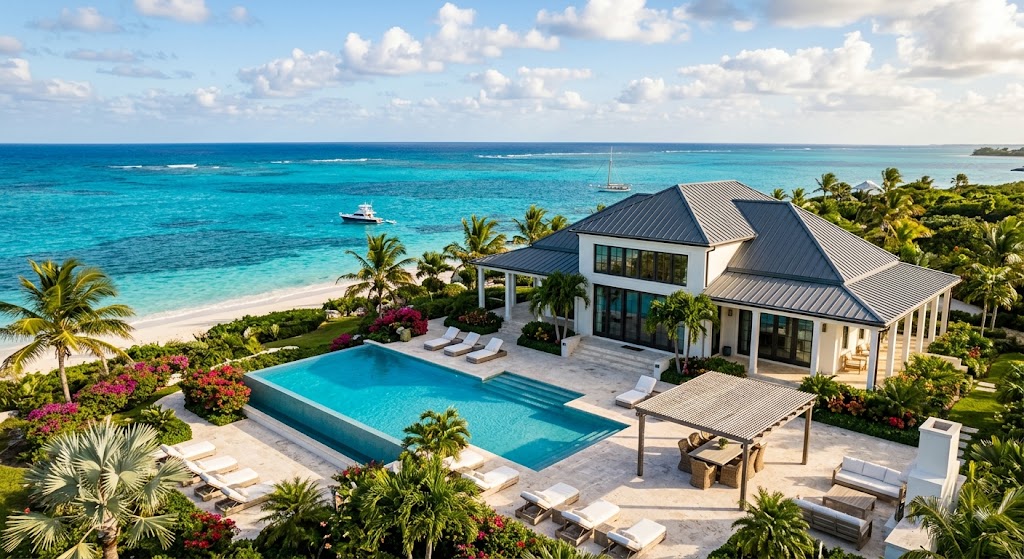

A record 165,000 high-net-worth individuals are projected to relocate internationally in 2026. Caribbean real estate, from the Bahamas to Turks & Caicos and the Dominican Republic, is capturing a meaningful share.
Here is what is driving the shift, and what it means for buyers, investors, and the markets they are choosing.
Caribbean real estate migration is reshaping where the world’s wealthiest individuals choose to live, invest, and hold assets in 2026. Henley and Partners projects that 165,000 high-net-worth individuals will relocate internationally this year. That figure has grown steadily since 2020. It shows no sign of reversing.
This is not a post-pandemic rebound effect. Rather, it is the expression of a longer-term recalibration. High-net-worth individuals are reassessing where their capital, their families, and their time belong. Caribbean real estate migration is now a primary destination in that conversation, not a secondary one.
For decades, wealth relocation pointed toward European capitals. Lisbon, Geneva, Monaco, Singapore, and Dubai captured the majority of that flow. The Caribbean, however, existed at the edge of those conversations. It was considered primarily a vacation destination and secondarily a tax structure. That positioning has changed fundamentally.
Several forces are converging simultaneously. Furthermore, they are not unrelated.
Tax reform across traditional holding jurisdictions has created urgency. Specifically, changes to capital gains treatment in the United Kingdom have pushed buyers to seek alternatives. Increased wealth reporting requirements across the European Union have added pressure. Additionally, evolving estate tax discussions in the United States have accelerated consideration of more stable jurisdictions. The Caribbean delivers that stability consistently.
Remote work norms have permanently decoupled income generation from geography. As a result, executives who once required proximity to headquarters now structure their year across multiple residences. The Caribbean time zone aligns broadly with U.S. Eastern. Therefore, Nassau or Providenciales is operationally viable for professionals with North American obligations. That viability has turned a lifestyle consideration into a practical one.
There is also a generational transition of wealth underway. Younger inheritors are more mobile than their predecessors. Moreover, first-generation entrepreneurs are more globally literate and more willing to treat quality of life as a legitimate variable in asset allocation. For this buyer generation, Caribbean real estate migration is not a departure from sound financial thinking. It is, in fact, an expression of it.
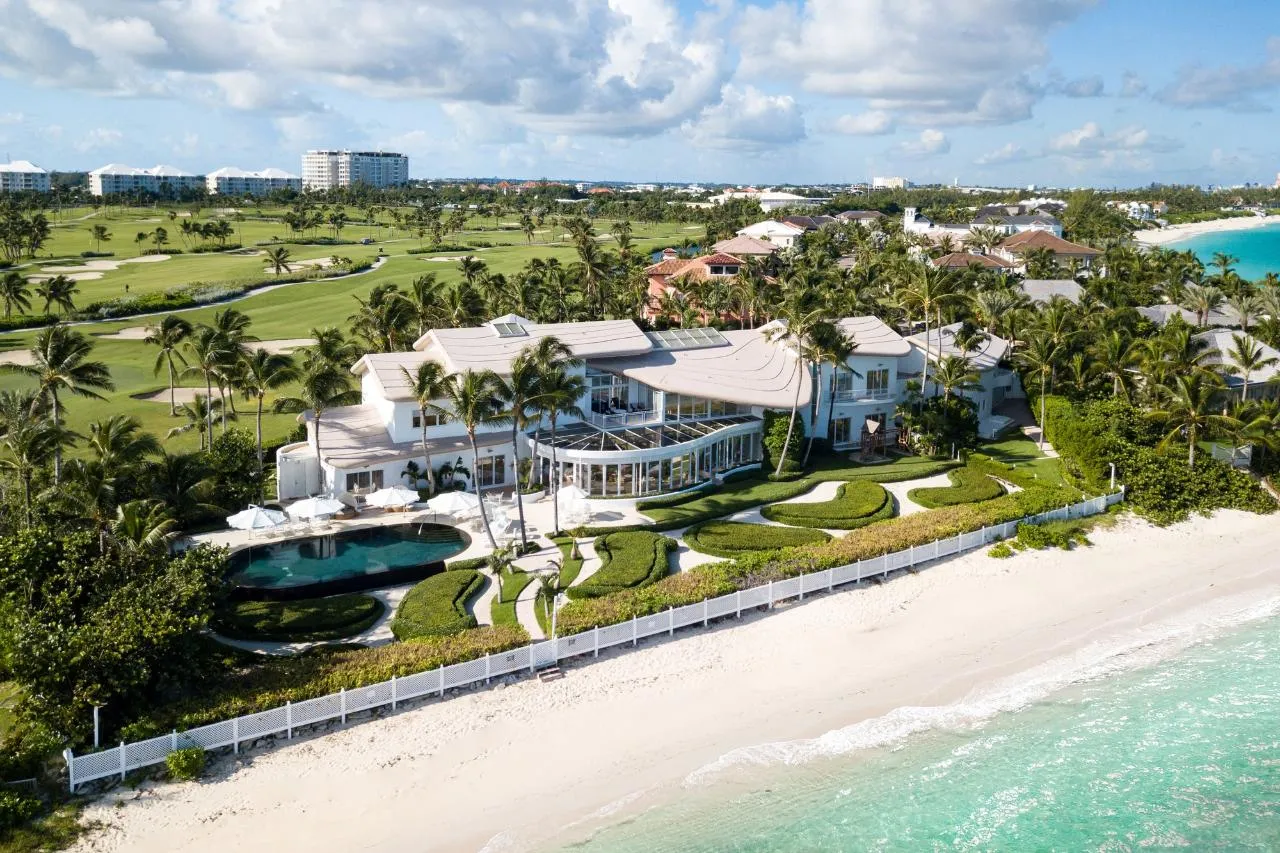
The Bahamas remains the most legible entry point for North American buyers. There is no capital gains tax, no income tax, and no inheritance tax. The estate planning advantages are structural rather than temporary. Furthermore, the regulatory environment for foreign ownership is among the most transparent in the region.
Flight access from Miami averages 50 minutes. From New York, the journey takes under three hours. Consequently, this accessibility reframes Bahamas real estate as an extension of the domestic property market. It removes significant friction from the buying decision.
The residential landscape has matured considerably. Albany, the Aman-branded enclave developed with Tiger Woods and Ernie Els, established a design and amenity standard that has influenced subsequent development across the islands. Four Seasons Private Residences at Ocean Club Estates provides institutional credibility alongside the investment. Hotel-managed services, structured rental programs, and a globally recognized brand underwrite resale value. Aqualina on Cable Beach represents a more accessible entry point. It pairs refined architecture with strong rental market fundamentals.
Supply remains the defining constraint. Well-priced properties in Lyford Cay and Old Fort Bay transact without extended marketing periods. The scarcity dynamic is real, not manufactured. Buyers who delay decisions in established neighborhoods routinely find that the inventory they were evaluating has moved. Harbour Island continues to trade at premiums. Those premiums reflect both limited land supply and the distinct character of a buyer community that prioritizes discretion and long holding periods.
For buyers considering relocation, Bahamas permanent residency is accessible through qualifying property investment. It provides a legal foundation for long-term occupation and tax planning flexibility. Understanding the buying process requires navigating market-specific conditions with experienced guidance. Those seeking to experience the islands first often begin with luxury villa rentals in the Bahamas. This approach allows buyers to evaluate specific neighborhoods before making a purchase decision.
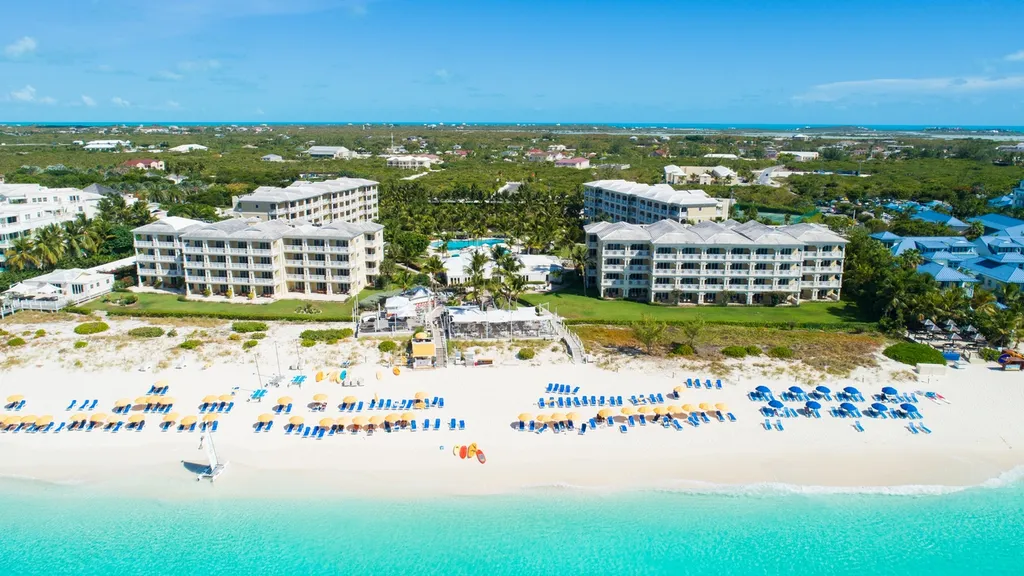
Turks and Caicos has built its appeal around deliberate limitation. Development density restrictions and coastline protection regulations have created a market where scarcity is encoded into policy. It is not manufactured by marketing. That distinction matters significantly to serious buyers.
Grace Bay and the surrounding Providenciales corridor have seen consistent price appreciation over the past decade. However, this appreciation is driven not by speculative volume but by constrained supply meeting sustained demand. Properties do not trade freely or frequently. In contrast to more liquid markets, this illiquidity is precisely what stability-focused buyers find reassuring.
The regulatory environment favors foreign ownership. There are no restrictions on non-resident property acquisition. Additionally, the title transfer process is comparatively straightforward. Stamp duty and annual property taxes remain modest relative to comparable U.S. resort markets. For buyers considering relocation, Turks and Caicos permanent residency pathways offer additional flexibility. The Loren at Turtle Cove represents the market’s current benchmark in branded residential design.
Furthermore, it signals where institutional capital and architectural ambition are pointing in the territory.
For those considering the islands before committing, Caribbean villa rentals in Turks and Caicos offer an informed and practical starting point.
Not every buyer is solving for the same equation. The Dominican Republic addresses a distinct set of priorities within the Caribbean real estate migration: scale, rental yield, and development upside. Entry prices here are what established markets simply cannot offer.
Cap Cana and Casa de Campo remain the primary reference points for international luxury buyers. Cap Cana is a 30,000-acre master-planned community on the eastern coast. It has attracted branded hotel operators, international golf course architects, and private villa developers. Together, they have elevated the design standard considerably. Oceanfront property here trades at 30 to 50 percent below comparable assets in Nassau or Providenciales. Therefore, for yield-focused buyers, that pricing disparity is material.
Miches, on the northeast coast, represents the frontier of this market. Over USD 1.18 billion in committed investment is positioned to transform currently underdeveloped coastline into a structured eco-luxury corridor. The development pipeline includes 3,400 hotel rooms and 1,400 residential units. Early positions carry development risk. However, they also carry the kind of upside that established markets can no longer provide.
The due diligence requirements in the Dominican Republic are more demanding than in the Bahamas or Turks and Caicos. Title verification, construction quality assessment, and developer track record all require experienced guidance. For buyers who conduct that process rigorously, the investment case is clear. Understanding how to sell real estate in the Bahamas and Turks and Caicos also provides relevant context for structuring Dominican Republic positions within a broader multi-market portfolio.
The built environment of Caribbean luxury real estate has shifted considerably over the past decade. Open structural systems now dissolve the boundary between interior space and outdoor living. Material palettes are calibrated to local context. Sustainability features reflect functional thinking rather than marketing language.
Branded residences have accelerated this transition. Aman, Four Seasons, Rosewood, and Bulgari each bring design standards and service protocols that independent developments struggle to match. Bulgari’s Caribbean entry through Cave Cay in Exuma represents one of the most significant brand commitments the region has seen. Additionally, Aman’s $260 million Exuma development confirms where ultra-luxury Caribbean real estate is heading.
The investment case is straightforward. Branded residences carry a valuation premium at acquisition. Moreover, that premium persists at resale. Buyers within a hotel-managed ecosystem benefit from property management infrastructure, rental program revenue, and liquidity advantages. Understanding why branded residences continue to define Caribbean real estate is therefore as important as understanding individual market fundamentals.
Conversations with active buyers reveal consistent priorities. These differ meaningfully from those driving the market five years ago.
Legal clarity above all else. Buyers are spending more time on title verification before evaluating any other variable. The buying process in the Bahamas and Turks and Caicos reflects a framework specifically designed to support foreign buyers.
Operational independence. Buyers want property that functions without their active involvement. As a result, demand has shifted toward branded residences and communities with integrated property management and concierge services.
Long-term value over short-term positioning. Speculative buyers who entered Caribbean markets between 2020 and 2022 have largely exited. In contrast, today’s buyers hold assets across five-to-fifteen-year horizons. They prioritize stability, estate planning utility, and lifestyle value alongside financial return.
Infrastructure proximity. Remote location has become a liability for a meaningful segment of buyers. Reliable utilities, healthcare access, and air connectivity are now underwritten into acquisition decisions with the same rigor as beach frontage.
The movement of global wealth toward Caribbean real estate is observable. Transaction volume, the branded project pipeline, and residency program updates all confirm it. These are adjustments that only happen when demand warrants them.
Caribbean real estate is not a single asset class. It is, rather, a collection of jurisdictions with distinct legal environments, infrastructure realities, and long-term trajectories. Treating them as interchangeable is consequently the most consistent error that first-time regional buyers make.
The decisions being made right now, which markets buyers enter, at what price points, and through which structures, will shape Caribbean portfolios for decades. Buyers with clear intelligence are acting with confidence. The rest are still deciding which island to visit first.
Connect With BE Luxury Collection
To explore Caribbean real estate opportunities, investment properties, or curated villa experiences across the Bahamas, Turks and Caicos, and the Dominican Republic, connect with BE Luxury Collection. Schedule a call with our advisory team to begin the conversation.

Follow
Intagram
