Luxury travel across the Caribbean is shifting toward privacy, flexibility, and highly curated experiences.
Explore how affluent travelers are redefining villa stays, yachting, wellness travel, and long-stay living across the region.
Luxury travel in the Caribbean is becoming noticeably quieter.
Not quieter in demand, but in behavior. The market has shifted away from highly visible consumption toward experiences that prioritize privacy, flexibility, and personal relevance. For affluent travelers, the value of a Caribbean stay is increasingly measured less by volume and spectacle and more by access, time efficiency, and environmental control.
This evolution is reshaping how luxury hospitality and residential markets across the region position themselves. The modern luxury traveler is often balancing business mobility, family logistics, and global schedules simultaneously. Travel has become more integrated into lifestyle infrastructure rather than existing as a separate seasonal indulgence. As a result, preferences across the Caribbean are becoming increasingly intentional.
Large resorts still attract significant traffic, particularly in established tourism corridors, but the strongest momentum within the premium segment has shifted toward private villas, branded residences, yacht-access communities, and experience-led stays designed around personalization rather than scale.
Across the Bahamas and Turks & Caicos, demand for standalone villa rentals and low-density residential resorts continues to outperform broader hospitality segments.
For many travelers, privacy is no longer viewed as an additional luxury feature. It has become an operational expectation.
Families traveling with staff, executives extending business travel into leisure stays, and multigenerational groups are increasingly prioritizing properties that provide controlled environments with integrated services. The ability to move seamlessly between private aviation, marina access, residence management, and concierge infrastructure has become central to premium Caribbean travel.
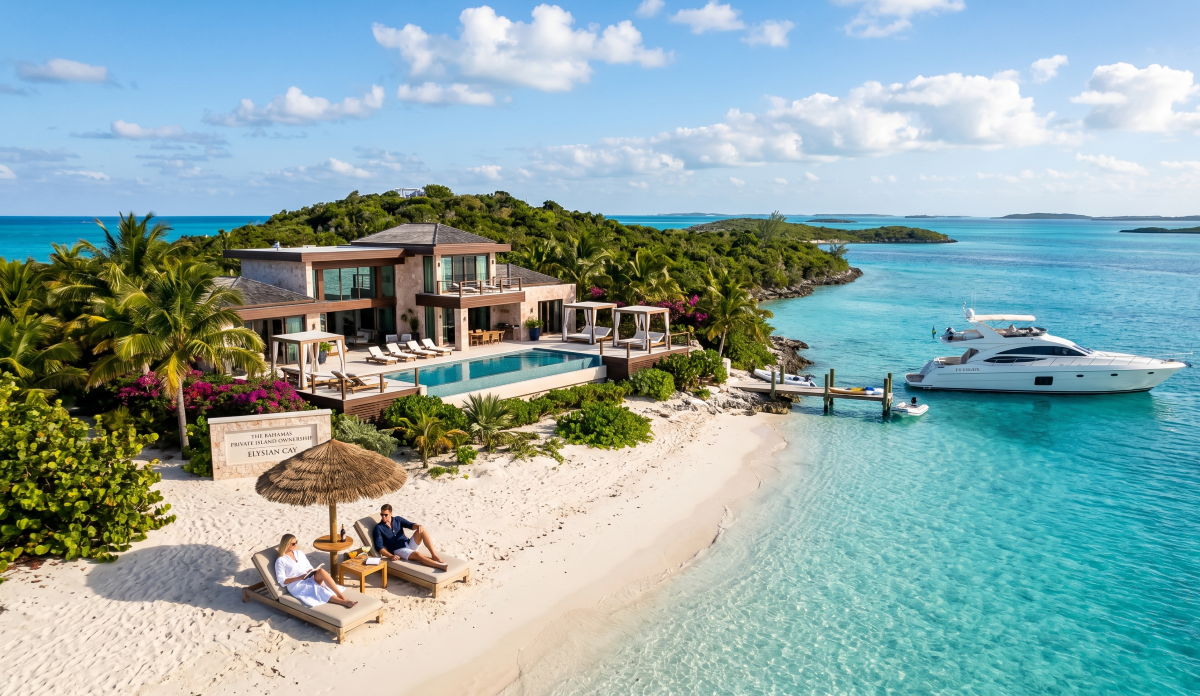
This is particularly visible in the Bahamas, where private island experiences and marina-connected communities continue to attract high-net-worth travelers seeking discretion alongside accessibility from major North American cities. Rather than maximizing itineraries, travelers are increasingly minimizing friction.
That behavioral shift has influenced everything from architecture and staffing models to dining concepts and wellness programming throughout the region. Properties are being designed with the understanding that affluent travelers expect operational seamlessness—professional staffing, integrated technology, privacy protocols, and flexible service delivery without the intrusion of traditional hospitality structures.
The traditional distinction between tourism and residential living has also become less defined.
Affluent travelers are spending longer periods within the Caribbean, often combining work, family travel, and seasonal relocation into a single extended stay. In response, luxury properties are adapting to support occupancy patterns that resemble temporary residency rather than short-term vacations.
Design priorities now increasingly include:
This has created stronger alignment between luxury hospitality and Caribbean real estate markets, particularly within branded residential developments offering hotel-level services alongside private ownership structures.
In the Dominican Republic, integrated resort communities such as Cap Cana continue attracting buyers and long-stay travelers seeking operational convenience alongside lifestyle infrastructure. The combination of golf, marina access, private residences, and hospitality services has positioned these developments competitively among globally mobile buyers evaluating second-home markets.
For travelers evaluating extended stays or seasonal relocation, understanding the distinction between vacation rentals and long-term residential ownership becomes strategically important. Properties designed for extended occupancy offer different value propositions than traditional short-term hospitality accommodations.
Luxury travelers are also becoming more selective about how they spend time while abroad.
The strongest demand is no longer necessarily attached to highly programmed itineraries or overtly performative experiences.
Instead, travelers are gravitating toward experiences that feel difficult to replicate elsewhere: private chef-led dining, offshore boating access, wellness-focused stays, art and architecture-led travel, and regionally informed experiences with limited scale.
This shift has created opportunities for smaller hospitality operators and independently managed estates capable of delivering high-touch service without traditional resort density. It has also influenced the villa rental market significantly.
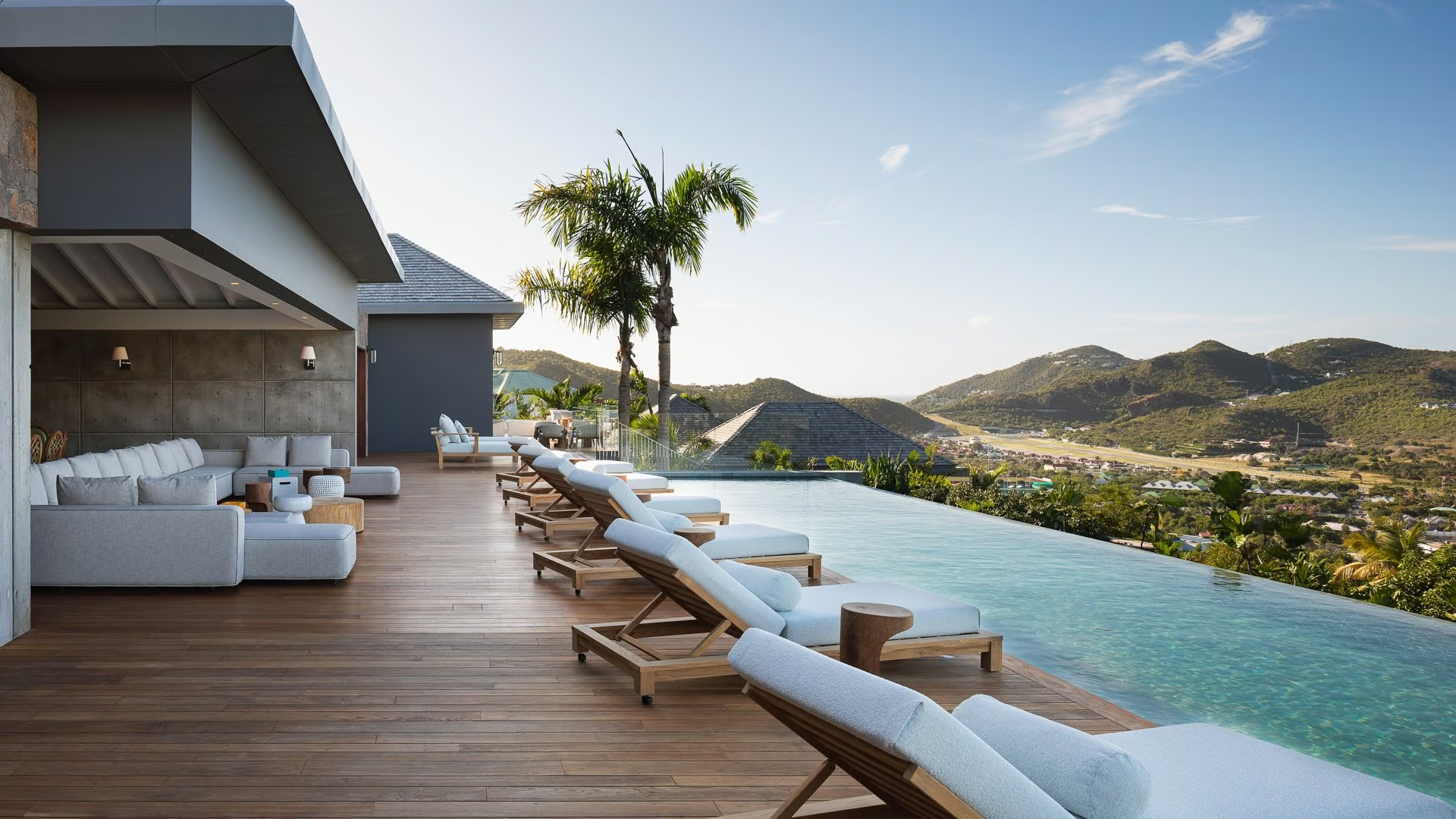
Across the Caribbean, professionally managed luxury villas are increasingly competing directly with five-star hotels, particularly among travelers prioritizing flexibility and privacy. For many affluent families, villa stays now function as the preferred hospitality model rather than an alternative accommodation category.
At the same time, yacht charters and marina-integrated travel continue gaining momentum among travelers seeking multi-destination Caribbean experiences without dependence on conventional resort structures. The appeal of yacht-accessible villa communities across the Bahamas and Turks & Caicos has intensified as travelers seek integrated mobility and privacy simultaneously.
The Bahamas remains the primary market for this trend. Close proximity to major U.S. cities, established private aviation infrastructure, and a culture of discretion make the region ideal for high-net-worth travelers prioritizing privacy without sacrifice of convenience.
Luxury villa rentals in Nassau, Paradise Island, and the Out Islands continue to attract families, executives, and multigenerational groups seeking operational control and service integration. The availability of private island experiences and dedicated concierge support has reinforced the Bahamas’ position as the region’s premier intentional travel destination.
Turks & Caicos continues to benefit from its commitment to low-density development and environmental preservation. For travelers seeking privacy within carefully managed communities, Providenciales and surrounding islands offer the balance of accessibility and restraint many affluent travelers now prioritize.
Villa rentals across Turks & Caicos benefit from consistent quality standards, professional property management, and integrated services that rival hotel offerings while maintaining residential-scale discretion.
The Dominican Republic has emerged as the region’s most significant market for integrated travel and residential experiences. Properties in Cap Cana, Punta Cana, and Casa de Campo combine villa rentals with hospitality services, marina access, golf, and wellness infrastructure—creating comprehensive lifestyle environments rather than single-purpose accommodations.
For travelers planning extended Caribbean stays while evaluating potential residential markets, the Dominican Republic’s integrated communities offer the operational infrastructure and service standards increasingly expected by affluent, globally mobile travelers.
Intentional travel increasingly includes wellness as a core component rather than an ancillary service.
Luxury villa experiences now feature:
This wellness focus has become particularly important for executives managing high-stress professional environments. Caribbean villas increasingly serve as operational bases for focused work combined with recovery and family time, rather than purely leisure destinations.
For travelers seeking this integration, professional concierge services play an essential role in coordinating wellness programming, nutrition, activity scheduling, and privacy management alongside traditional hospitality services.
The distinction between vacation rental properties and investment real estate has also become increasingly blurred.
Affluent travelers are now evaluating Caribbean properties not simply as temporary vacation accommodations but as potential investment assets capable of generating rental income when owners are not occupying them. This dual-purpose evaluation has accelerated demand for professionally managed properties with proven rental track records.
Caribbean real estate that performs well in the vacation rental market simultaneously benefits from appreciation potential and income generation—creating a compelling investment thesis for buyers who travel frequently to the region.
Understanding the buying process for properties designed with both residential and rental functionality becomes essential for this buyer profile. Properties in the Bahamas, Turks & Caicos, and the Dominican Republic increasingly feature explicitly designed dual-purpose layouts supporting both personal occupancy and rental operations.
The Caribbean’s premium travel market is evolving alongside broader shifts in global wealth behavior.
Affluent travelers are increasingly prioritizing destinations capable of supporting lifestyle continuity rather than temporary escape. Infrastructure, aviation access, service reliability, healthcare availability, and operational convenience now influence destination decisions as heavily as climate or scenery.
For the region’s hospitality and residential sectors, this transition is significant. The Caribbean is no longer competing solely as a seasonal leisure destination. Increasingly, it is positioning itself as part of a globally mobile lifestyle economy where travel, residential ownership, and long-term living overlap.
That evolution is likely to define the region’s luxury market for the next decade. Properties capable of serving multiple functions—vacation retreat, investment asset, potential permanent residence, family gathering place will command premium valuations and maintain stronger liquidity than single-purpose assets.
For buyers and travelers evaluating Caribbean opportunities, this shift creates both complexity and opportunity. The market now rewards properties and destinations capable of adapting to the increasingly sophisticated expectations of globally mobile affluent individuals.
To explore Caribbean villa experiences, luxury vacation residences, real estate investment opportunities, or bespoke concierge services supporting intentional Caribbean travel and living, connect with BE Luxury Collection.

Follow
Intagram