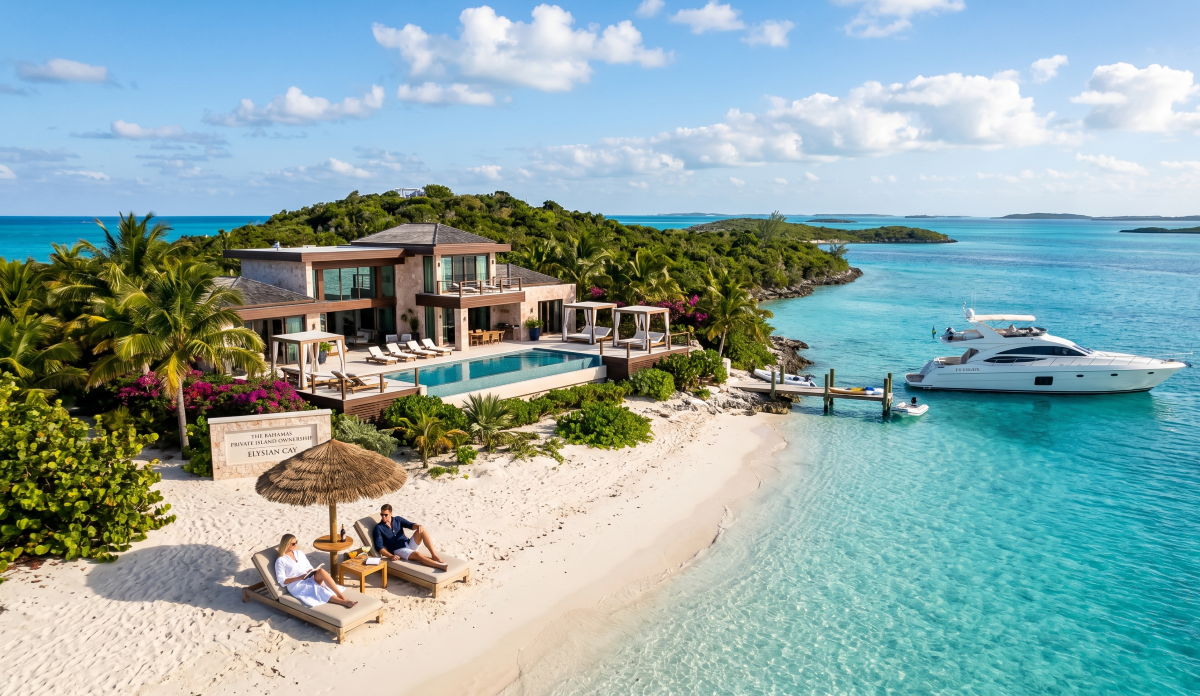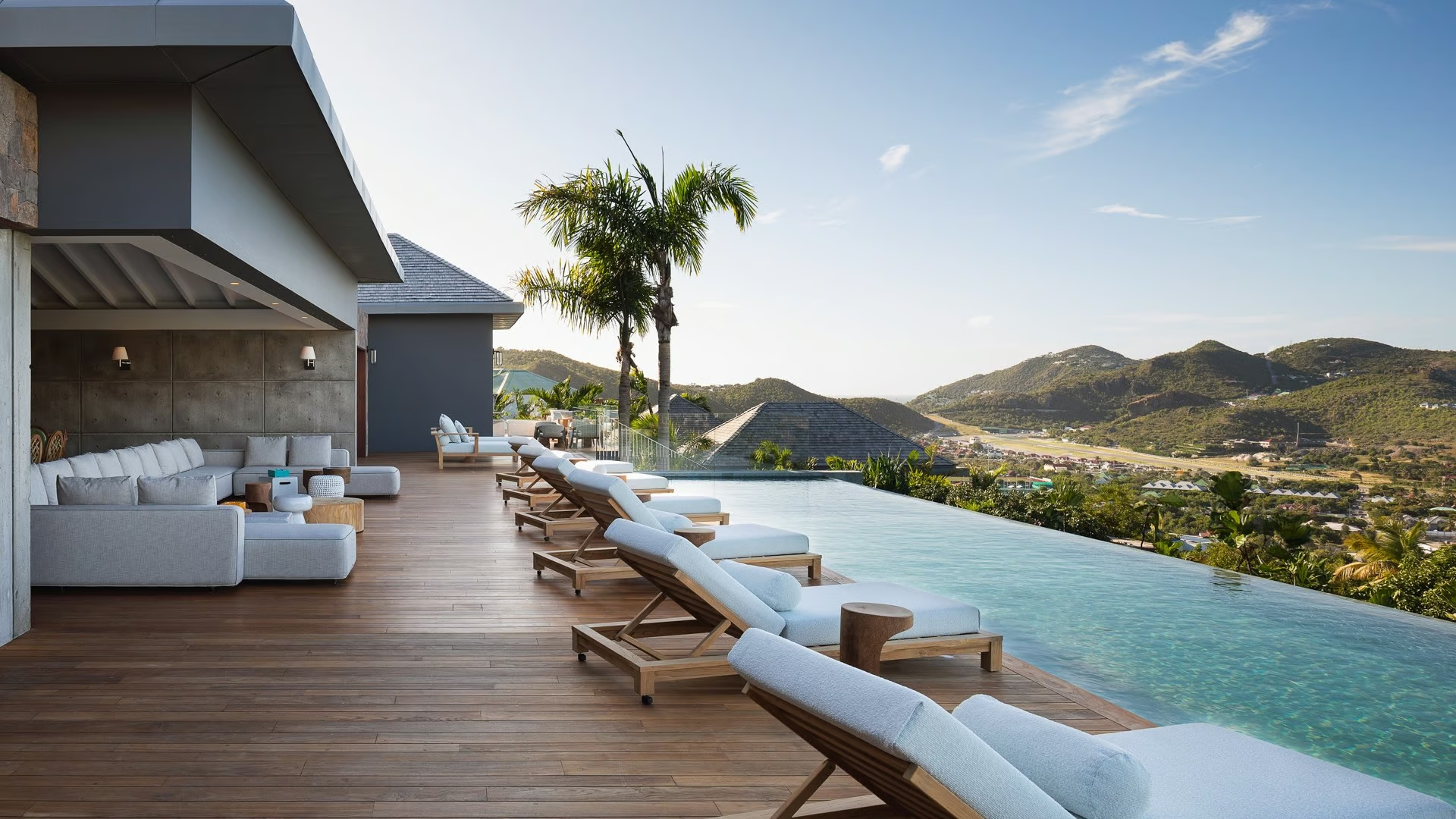
There is no asset quite like an island of one’s own. For buyers searching for a private island for sale, the Bahamas remains the definitive market: some 700 islands and cays, English common law, a currency pegged to the United States dollar, and a forty-minute flight from Miami. In 2026, this market is commanding renewed global attention, with headline listings from the Berry Islands to the Exumas drawing serious capital. This guide from BE Luxury Collection examines what the market looks like this year, where the strongest opportunities sit, how the legal process works for international buyers, and what due diligence separates a sound acquisition from an expensive lesson.
Privacy has become the defining luxury of this decade. High-net-worth buyers are no longer simply purchasing seclusion; they are purchasing control — over access, over the horizon line, over who shares their shoreline. Few markets answer that demand the way the Bahamas does. The archipelago offers a rare combination: genuine remoteness within practical reach of major international gateways, political and economic stability, and a long-established culture of discretion.
The result is a private-island market with unusual depth. Listings range from modest undeveloped cays to turnkey estates with staff housing, deep-water docks, and airstrips. And for those looking to buy a private island in the Caribbean, the Bahamas holds a structural advantage over more distant jurisdictions: American and Canadian buyers can reach their island in hours, not days, while European buyers connect through Nassau’s international gateways.
Understanding the price spectrum is the first step in any serious search. Current Bahamas private island listings illustrate just how wide the market runs.
At the top of the market sits Bonds Cay, a 650-acre island in the Berry Islands listed at approximately $30 million. The island carries genuine provenance: it was acquired in the mid-2000s by an investor group that included Shakira and Roger Waters, who envisioned an artists’ retreat that never materialized. The listing spans some 13 miles of shoreline and remains largely untouched.
In the Exumas, Leaf Cay is currently listed at $15.9 million — a fully serviced private island two miles west of Staniel Cay with three beaches, a large dock, a main house and guest house, and power supplied by underwater cable from Staniel Cay. The listing notes approved plans for a full resort and marina, including overwater bungalows.
Abaco offers Jwycesska Island at $14.95 million: a 351-acre freehold island with government approval for a 6,000-foot private airstrip, a 30-acre marina, and commercial resort use with Hotel Encouragement Act benefits — a meaningful consideration for buyers weighing development potential.
And the entry point may surprise. Hawk’s Nest Cay, a 25-acre island off Cat Island near the Hawk’s Nest Resort and Marina, was reported listed at £751,376 in mid-2026 — less than the average price of a London terraced house. The spread from under $1 million to $30 million is precisely what makes this market worth studying: there is a private island in the Bahamas for nearly every tier of qualified buyer.
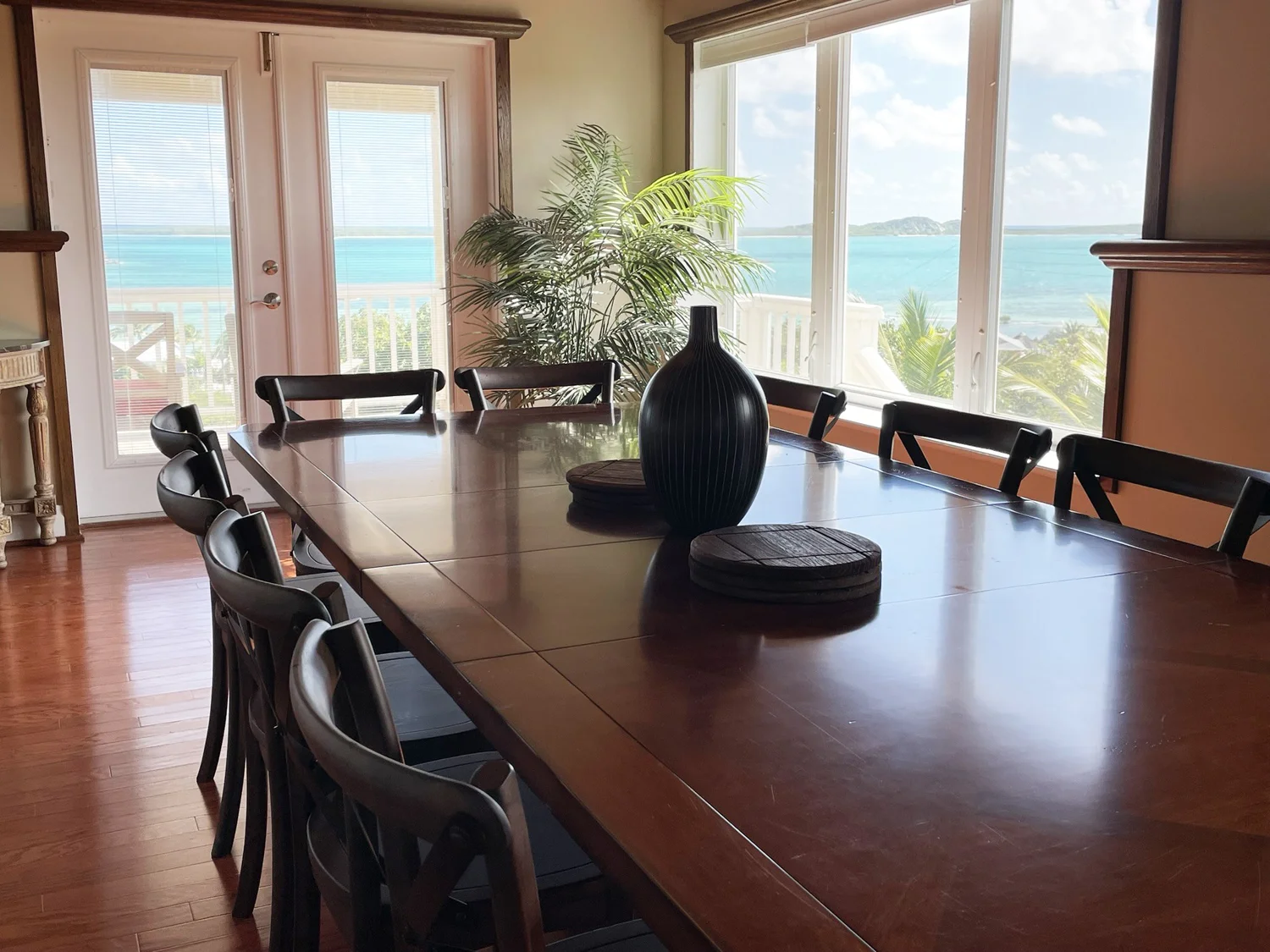
Not all Bahamian waters are equal. Each island group carries its own character, access profile, and buyer psychology.
The Exuma Cays remain the prestige address. With 365 cays stretching south of Nassau, the Exumas combine world-famous natural beauty with genuine infrastructure — Staniel Cay and Great Exuma provide provisioning, aviation access, and professional services. Islands here command premium pricing, but they also offer the strongest resale liquidity and the most developed luxury rental market. Explore current opportunities in our Exuma real estate portfolio.
Abaco is the boater’s archipelago. Its 120-mile chain of islands and cays offers some of the finest cruising waters in the Western Hemisphere, with established settlements at Marsh Harbour, Hope Town, and Green Turtle Cay providing services and community. Private islands here appeal to buyers who want their island integrated with an active maritime lifestyle rather than total isolation.
The Berry Islands offer the blank-canvas play. Thirty minutes by boat from Nassau yet feeling worlds apart, the Berry Islands host some of the largest privately held islands currently available — including Bonds Cay. Buyers here are typically acquiring scale and privacy with development optionality.
Cat Island and the southern islands represent the value frontier. Lower entry prices, authentic Bahamian character, and improving access make these islands compelling for buyers who prioritize natural beauty and long-term appreciation over immediate infrastructure.
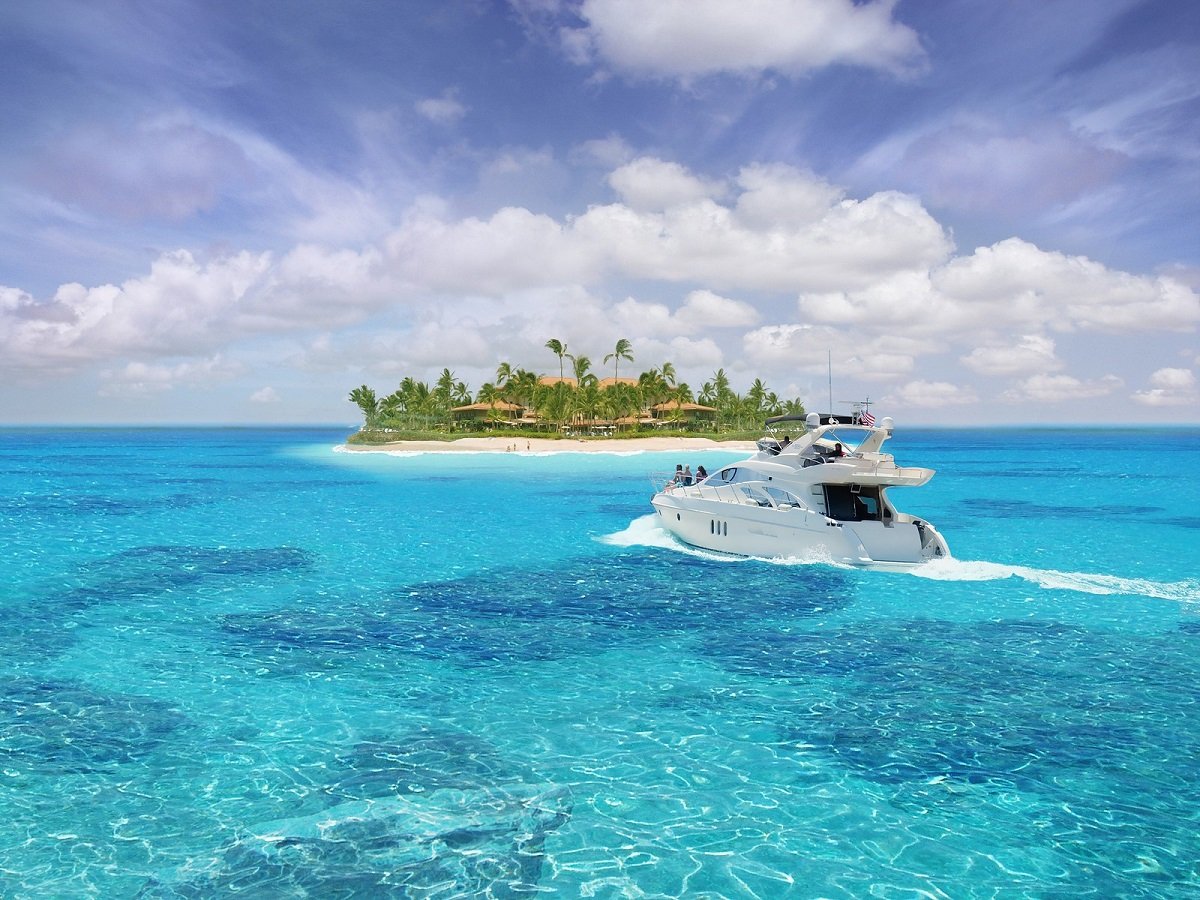
One of the Bahamas’ enduring advantages is legal clarity. Foreign buyers are welcome, and the framework is well established — but private-island acquisitions almost always trigger requirements that a standard home purchase does not.
Under the International Persons Landholding Act, non-Bahamians may acquire residential property of up to five acres with registration only — no prior government approval is required. However, a permit from the Investments Board is required where the purchaser would hold five or more contiguous acres of undeveloped land, which describes nearly every private island transaction. Applications are submitted to the Office of the Prime Minister, and buyers should allow adequate time for processing within their transaction timeline.
There is a further consideration that sophisticated buyers appreciate: proceeds of a future sale, including profits, may be repatriated in full provided the original purchase was registered with the Exchange Control Department of the Central Bank of The Bahamas at the time of acquisition. This registration is a standard step in a properly managed closing.
The Bahamas levies no personal income tax, no capital gains tax, and no inheritance tax — a fiscal profile that meaningfully improves the long-term economics of island ownership. Property owners may also qualify for residency: ownership of property valued at $250,000 or more supports an annual homeowner’s residence application, while property valued at $1 million or more supports an application for economic permanent residency.
Given the sums involved and the permit requirements, engaging Bahamian legal counsel at the outset is not optional. It is the foundation of the transaction.
A private island is not a house with water around it. It is a small, self-contained jurisdiction, and due diligence must reflect that reality.
Bahamian title is generally freehold and well documented, but island parcels can carry complex histories. A full title search through Bahamian counsel, with title insurance where available, is essential.
How does one actually reach the island, in all seasons and all weather? Deeded dock rights, airstrip condition and approvals, helicopter access, and the reliability of the nearest provisioning point all affect both livability and value. An island that is difficult to reach is difficult to sell.
Power generation, fresh water (wells, desalination, or rainwater catchment), sewage treatment, and communications infrastructure determine whether an island is a turnkey estate or a development project. Leaf Cay’s underwater power cable from Staniel Cay is an example of infrastructure that materially changes an island’s proposition.
Shoreline works, dredging, dock construction, and resort development all require government approvals. Jwycesska’s pre-approved airstrip, marina, and resort entitlements illustrate how existing approvals can compress years of process into immediate optionality. Where approvals do not yet exist, buyers should underwrite both the timeline and the uncertainty.
Beyond lifestyle, the ownership economics deserve a clear-eyed look. A well-positioned private island can generate meaningful income through ultra-luxury rentals, where weekly rates for turnkey islands reach levels that rival the world’s finest hotels. The Bahamas’ tax profile — no income, capital gains, or inheritance tax — means more of that income and appreciation stays with the owner.
There is also a scarcity argument that strengthens with time. The supply of private islands in the Bahamas is finite and, in the most desirable cays, effectively fixed. As global wealth continues to concentrate and privacy continues to appreciate as a luxury good, well-located islands have historically proven resilient stores of value.
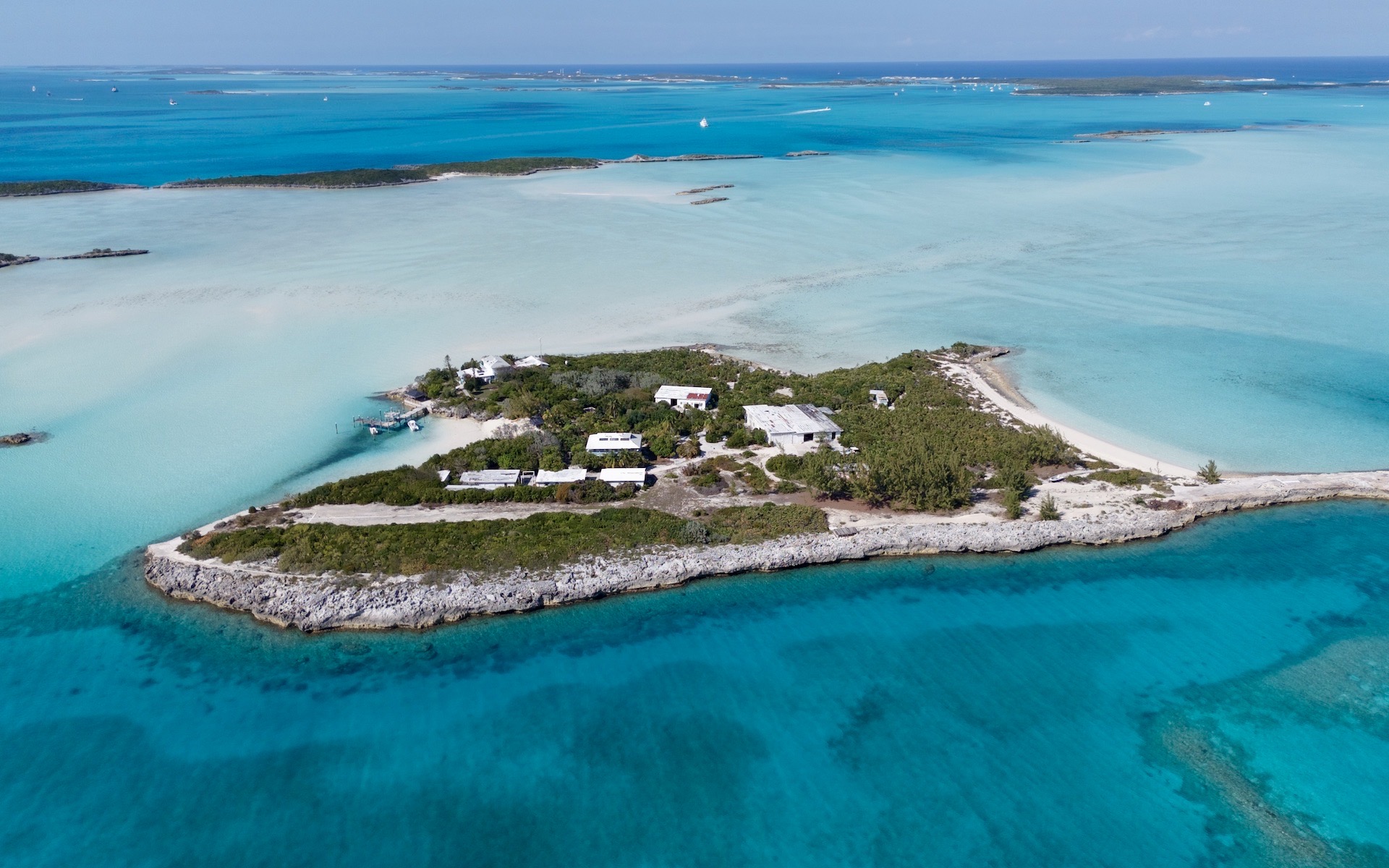
Buying a private island is among the most consequential acquisitions a person can make. It rewards buyers who understand not just the island, but the waters around it — access patterns, infrastructure pipelines, title nuances, and the regulatory path from offer to ownership. That is the advisory BE Luxury Collection was built to provide.
Speak with an advisor for a confidential assessment of current private-island opportunities across the Bahamas, or contact BE Luxury Collection to begin the conversation.
New to the acquisition process? Read our Bahamas Private Island Ownership: 2026 Acquisition Guide.
Current listings range from under $1 million for smaller undeveloped cays — such as the 25-acre Hawk’s Nest Cay off Cat Island, reported at £751,376 — to approximately $30 million for the 650-acre Bonds Cay in the Berry Islands. Well-serviced islands in the Exumas and Abaco typically list between $10 million and $20 million.
Yes. Non-Bahamians may freely acquire Bahamian real estate, but private-island purchases almost always require a permit from the Investments Board under the International Persons Landholding Act, since they typically involve five or more contiguous acres of undeveloped land. Registration with the Central Bank’s Exchange Control Department at purchase also preserves the right to repatriate sale proceeds in full.
The Exuma Cays offer the strongest prestige, infrastructure, and resale liquidity; Abaco suits buyers seeking an active boating lifestyle with nearby settlements; the Berry Islands offer large-scale privacy close to Nassau; and Cat Island and the southern islands offer the most accessible entry prices.
A turnkey private island can command ultra-luxury weekly rental rates that rival the world’s finest hotels. Income potential depends on the island’s infrastructure, access, accommodation quality, and professional management. The Bahamas levies no personal income tax, which improves net returns.
Owners should budget for staff, power generation and maintenance, water systems, dock and shoreline upkeep, insurance (including hurricane coverage), and property management. These costs vary widely with the island’s level of development and should be modeled before purchase.
A straightforward transaction can complete in 60 to 90 days, but private-island acquisitions involving Investments Board permits, extensive due diligence, or development approvals should be underwritten on a longer timeline. Engaging Bahamian counsel early keeps the process on track.

Follow
Intagram