

This is not a lesser route into island life. It is the route most of our long-standing owners took, whether they planned it that way or not. A winter under lease turns a market into a neighbourhood. The staff become known, the routines settle, and by spring the question is no longer whether The Bahamas works — it is which house, on which street, in the community the family has already been living in.
BE Luxury Collection and The BELC Team handle long-term rentals across Nassau’s established communities each season. This guide sets out how executive long-term rentals work in The Bahamas, what a season under lease includes, and how the tenancy so often becomes the first stage of ownership.
A viewing trip shows houses. A season shows life. The difference matters at this level, because the decision being made is not really about property — it is about where a household will spend a quarter of every year, and in the company of which community.
Under lease, the practical questions answer themselves. Whether the commute to the marina is ten minutes or forty. Whether the children settle into the school and the beach club. Whether the house that photographed so well in October holds its comfort in February’s northerlies. Whether the Family Islands, visited on weekends from a Nassau base, pull the family outward — or whether the base itself becomes the point.
None of this can be compressed into a week of viewings, however well arranged. It is learned by living, and a season is the honest unit of measure.
There is a second, quieter advantage. A family under lease is treated by an island as a resident. They are introduced properly, known at the club, expected at the same tables. When the time comes to buy — in the same community, often on the same street — they are not entering a market cold. They are formalising a position they already hold. Sellers and neighbours know the difference, and transactions between known parties tend to run more smoothly than transactions between strangers.
This winter, that pattern is carrying more households than usual. Allianz Canada’s winter travel research records the United States as no longer the first choice of Canadian winter travellers, and a Globe and Mail survey of snowbirds put the share planning an American winter at 12.5 per cent — roughly half the level of the season before. The winter is still being taken. It is being taken elsewhere.
The Bahamas is where a measurable part of it has landed. Stopover arrivals reached a record 1,314,639 in the first seven months of 2026, up 4.3 per cent on the same period last year, and Canadian stopovers rose 15.4 per cent over that span. A season under lease is how a visiting winter becomes a resident one — and this year, more households are positioned to make exactly that progression.
The established long-term rental market in Nassau concentrates where the ownership market does: the gated communities of the west and Paradise Island. Lyford Cay, Old Fort Bay and Ocean Club Estates carry the depth of it — houses and residences let for the season or the year, within communities that provide security, beach clubs, marinas and management infrastructure as a matter of course. Current availability across these communities can be reviewed in our Bahamas rental search.
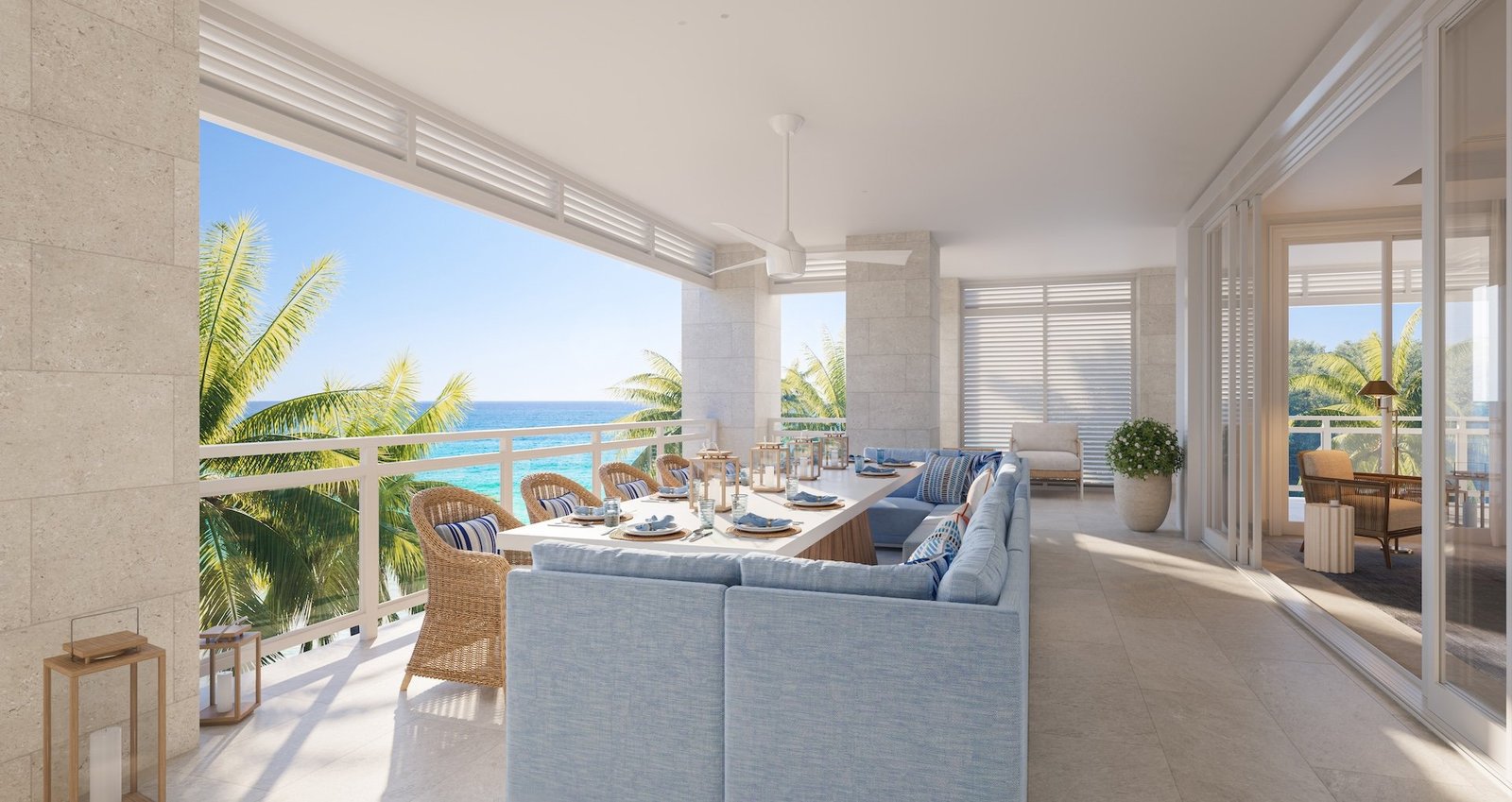
Beyond the gates, the market thins into individual estates let by their owners, often for a single season while the house is between uses. These come to market quietly and let quickly, usually through advisors who know which owners are considering a season away. It is one of the practical reasons the rental search is best run with an advisor rather than alone: the visible listings are the market’s surface, not its whole.
A winter tenancy is typically structured for the season — three to six months spanning the core winter — or on a twelve-month term for households relocating more fully. Agreements are prepared under Bahamian practice, with rent payable monthly or by the term, a security deposit, and clear allocation of responsibilities: utilities, pool and garden service, and household staffing are specified rather than assumed.
Furnished is the norm at the top end. Houses let for the season are presented as their owners live in them — furnished, equipped, and maintained — with professional management in place for the tenancy’s duration. For the tenant, the practical standard is simple: arrive with luggage; the house should already work.
Costs at this level are set property by property — by community, size, staffing and term — and are confirmed in the agreement rather than quoted generically. Beyond rent itself, a tenant should budget for utilities and communications, household staffing where the house requires it, and club or community charges where these are passed through under the lease. Set against a purchase, the season’s arithmetic is straightforward: the full experience of the community, for a defined term, with no capital committed and no obligation carried past the spring.
The pattern repeats often enough that we plan for it. A family rents for a winter, intending diligence. By February they know the island. By spring they are discussing a specific house — frequently the one they have been renting, or the one two streets over that they have walked past all season. The purchase that follows is made from inside the community, with full knowledge of how the house and the neighbourhood behave across a whole season, including the weeks a viewing trip never sees.
This is also where the calendar works in the tenant’s favour. The November window — set out in our guide to buying a Bahamas winter home — rewards buyers who are already here. A tenant in residence can view the moment a house comes to market, decide without a flight, and run the closing sequence while living around the corner from the property. The season that began as reconnaissance ends, often, as the first winter in a house of their own.
For households already certain of The Bahamas and the community, buying first remains the right course — the earlier article addresses that timing directly. Renting first is for the household whose remaining questions are about place, not about paperwork. A lease answers those questions better than any other instrument available.

BE Luxury Collection is the Caribbean real estate and villa advisory for those who winter in these islands, and The BELC Team manages the long-term rental practice on the ground in Nassau. If a first winter under lease is under consideration, the conversation begins with the community and the way the season will be lived — the house follows from there.
Review current long-term rentals in The Bahamas, or request a private consultation and we will present the season’s availability, including houses not publicly listed.
For winter tenants, typically a season — three to six months across the core winter. Households relocating more fully usually take twelve months. Terms are set in the agreement and vary by property and owner.
The depth of the executive market sits in the gated communities: Lyford Cay, Old Fort Bay and Ocean Club Estates on Paradise Island. Each provides security, amenities and management infrastructure in place, which is what a seasonal tenancy requires.
At the top end, yes, as a rule. Houses are let as their owners live in them — furnished and equipped, with management arranged. The specific inventory of furnishings and services is confirmed in the agreement before the term begins.
Rates are set property by property, by community, size and term, and confirmed in the agreement. Beyond rent, tenants should budget for utilities, staffing where the house requires it, and any community or club charges the lease passes through.
Regularly. A season under lease is how many owners first learned their community. Tenants in residence view new listings as they appear, decide without travel pressure, and often purchase in the same community — sometimes the same house.
Availability for the season is largely committed by late autumn. Households considering a first winter under lease should open the conversation in the autumn, when the better houses are still in discussion rather than already let.