Caribbean citizenship investment has moved from a niche strategy to a mainstream wealth planning tool. Political instability, shifting tax regimes, and the practical value of visa-free mobility have pushed a broader investor class toward second passports. In response, five Caribbean nations now operate formal citizenship-by-investment programs. Each offers a legal pathway to a second passport in exchange for a qualifying financial contribution.
For BELC clients evaluating Caribbean real estate as part of a broader residency or citizenship strategy, understanding these programs is essential. Not every client wants citizenship. Some prefer permanent residency through property ownership, which the Bahamas and Turks and Caicos both offer. Therefore, this guide covers both pathways. First, the five CBI programs. Then, the residency-by-property alternatives that may suit buyers with different objectives.
St. Kitts and Nevis launched the region’s first citizenship-by-investment program in 1984. Consequently, it carries the longest track record and the most established institutional framework. The process is fast. Most applications complete within a few months.
Two pathways are available. The first is a non-refundable donation to the Sustainable Island State Contribution Fund. The minimum contribution is $250,000. The second is an approved real estate investment, which must be held for a minimum of seven years. Applicants can include spouses, children under 18, financially dependent children up to 30, children with disabilities, and dependent parents over 55. In-person interviews are required for applicants aged 16 and older. Notably, there is no residency requirement. A St. Kitts passport provides visa-free access to the EU Schengen Area, the UK, Ireland, Switzerland, and CARICOM nations. The country levies no income, wealth, or inheritance tax. The Caribbean Millionaire Migration report contextualizes why these programs are absorbing record applicant volumes in 2026.
Grenada’s program offers something no other Caribbean CBI jurisdiction can match. Specifically, Grenadian citizens are eligible to apply for the US E-2 investor visa. This visa allows holders to live and work in the United States while operating a qualifying business. For investors with US business interests, this is a significant advantage.
Two investment pathways are available. The first is a $235,000 donation to the National Transformation Fund. The second is a $270,000 investment in approved real estate. Family inclusions are broad. Spouses, children under 30, dependent parents, grandparents, and unmarried siblings over 18 without children can all be included. The process typically takes nine to twelve months. As with St. Kitts, there is no visitation or residency requirement. Grenada imposes no global income, capital gains, inheritance, or wealth tax. The Caribbean Real Estate 2026 Forecast examines how CBI-driven demand intersects with broader regional property trends.
Saint Lucia’s program is structurally similar to its neighbors but has gained attention for its streamlined processing. The minimum investment is $240,000 through either a government fund donation or approved real estate. There is no physical presence requirement. Security and background checks are mandatory. Interviews can be conducted in person, at a Saint Lucia embassy, or online. This flexibility matters for applicants managing complex travel schedules.
Family members can be included in the application. The Saint Lucia passport grants visa-free entry to 148 countries, including the Schengen Area. Dual citizenship is permitted. For investors comparing program structures across the region, the Caribbean Real Estate Market Divergence analysis breaks down how different jurisdictions position themselves.
Dominica offers the lowest entry point among the five programs. The minimum investment is $200,000. Processing typically takes six to nine months. There is no residency requirement. All applicants undergo security screening and an interview.
A Dominica passport provides visa-free or visa-on-arrival access to 140 countries. Dual citizenship is permitted. Furthermore, no tax is levied on foreign income. For cost-conscious investors, Dominica represents the most accessible Caribbean citizenship investment option currently available. However, buyers should weigh processing timelines against their broader planning needs. The Bahamas Real Estate Investment Insights guide provides a comparison between CBI markets and residency-by-property markets like the Bahamas.
Antigua and Barbuda offers the most diversified investment structure. Options include a donation, real estate purchase, business investment, or contribution to a university fund. The minimum investment is $230,000. Processing takes six to nine months.
Unlike the other programs, Antigua has a minimal residency requirement. Specifically, new citizens must spend five days in the country within the first five years after citizenship is granted. Virtual interviews are conducted for applicants and dependents aged 16 and older. Family inclusion is comprehensive. An Antigua passport allows visa-free entry to over 150 countries. There is no tax on foreign income, and dual citizenship is permitted. For travellers wanting to experience the island before committing, Antigua villa rentals provide direct exposure to the lifestyle the program supports.
Caribbean citizenship investment is one pathway. It is not the only one. For BELC clients whose primary goal is a durable legal presence rather than a second passport, both the Bahamas and Turks and Caicos offer permanent residency through qualifying property investment.
The Bahamas residency by investment pathway requires a property purchase of $1,000,000 or more. The investment must be maintained for at least 10 years. According to the Bahamas Department of Immigration, acquisitions above $2,000,000 receive expedited processing. Residency does not grant citizenship or work rights. However, it establishes a tax-advantaged legal presence in a British Commonwealth jurisdiction with no personal income, capital gains, or inheritance tax. Properties like the 27 Ocean Club Estate at $7,995,000 and Paradise Found on Paradise Island both qualify well above the threshold. The Lyford Cay and Old Fort Bay guide covers the communities where qualifying inventory is concentrated. Additionally, the Top Gated Communities in Nassau resource rounds out the landscape.
Turks and Caicos offers a parallel pathway. The Turks and Caicos Condominium Buyer Guide 2026 outlines the market context. Properties like the Saphora Grace Bay 402 and the Kempinski Grace Bay illustrate the quality of inventory available on Providenciales. For buyers seeking larger-scale acquisitions, Lumiere Villas at $8,800,000 and Villa Dawn at $4,900,000 represent the upper end of the TCI market.
The choice between CBI and residency-by-property depends on the buyer’s objective. If the goal is a second passport with visa-free mobility, CBI programs deliver that outcome directly. St. Kitts, Grenada, Dominica, St. Lucia, and Antigua all provide passports within 6 to 12 months.
If the goal is a durable foothold in a jurisdiction where the buyer also intends to own and use property, the Bahamas and TCI pathways offer a different value proposition. The investment threshold is higher. In return, the buyer acquires a tangible asset in a market with deeper infrastructure and a more established luxury real estate ecosystem.
For some clients, the optimal strategy combines both. A CBI passport provides mobility. Meanwhile, a qualifying property investment in the Bahamas or TCI establishes residency. The analysis of why global lifestyle brands invest in Caribbean real estate shows how institutional capital is pursuing the same dual approach.
Both pathways,citizenship and residency benefit from direct market exposure before committing. Caribbean villa rentals across the Bahamas, Turks and Caicos, and Antigua allow prospective applicants to evaluate the lifestyle, infrastructure, and community fit before making a financial commitment.
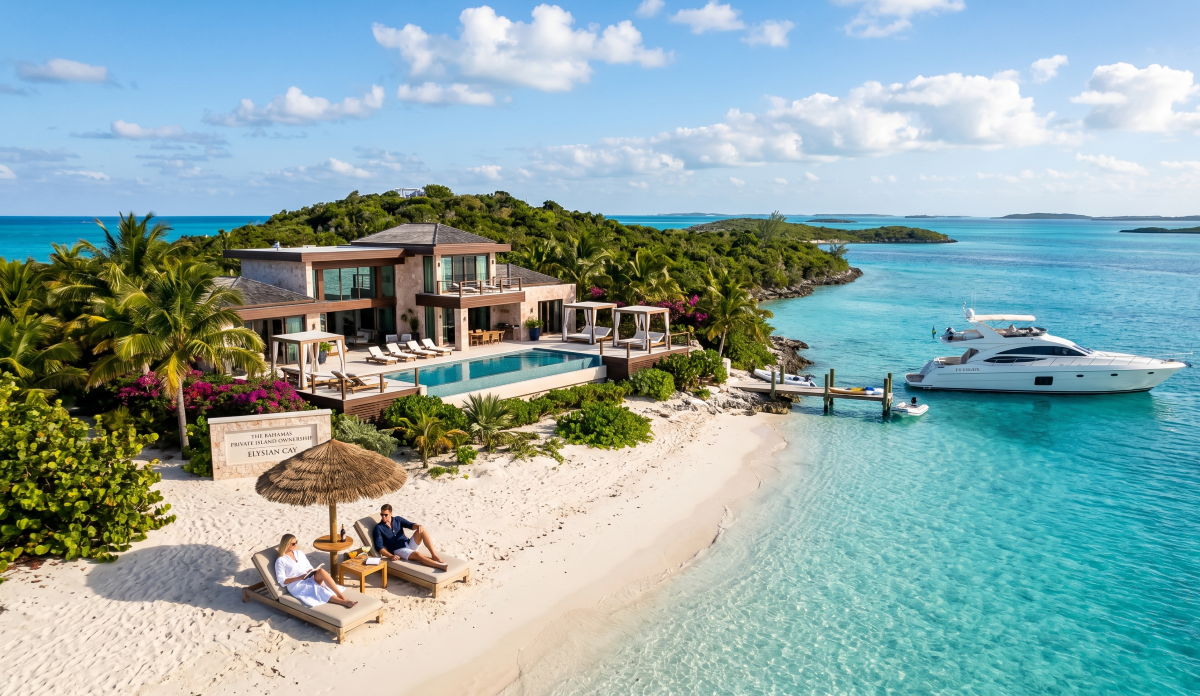
For buyers focused on the Bahamas, Bahamas villa rentals span Nassau, Paradise Island, and the Family Islands. The Jimmy Hill Beach House in Exuma at $1,550,000 illustrates the kind of property that qualifies for residency while also functioning as a personal retreat. The Beaumont Estate on Eastern Road at $4,100,000 is another qualifying property that serves a family use case. The Harbour Island Real Estate Guide covers the northern Family Islands for buyers exploring that corridor. For those considering the highest end of the market, the Bahamas Private Island Ownership guide addresses acquisitions that also qualify for residency.
For buyers weighing Anguilla as a base, the Anguilla villa rentals page and the Anguilla ultra-luxury villa market guide provide relevant context. The Christmas and New Year’s in Turks and Caicos guide covers the festive booking window for TCI.
BE Luxury Collection advises clients navigating the full spectrum of Caribbean investment immigration. As associates of HGC Christie’s International Real Estate, the firm’s advisory spans CBI program selection, Bahamas and TCI residency-by-property planning, and the underlying real estate acquisition itself.
The right program depends on the buyer’s tax residency, family structure, travel patterns, and long-term objectives. For that reason, generic comparisons only go so far. A structured conversation with an advisor who understands both the immigration framework and the property market produces better outcomes.
Contact a BELC advisor to begin the process. The full Bahamas real estate listings and Turks and Caicos real estate listings pages carry current qualifying inventory.

Follow
Intagram