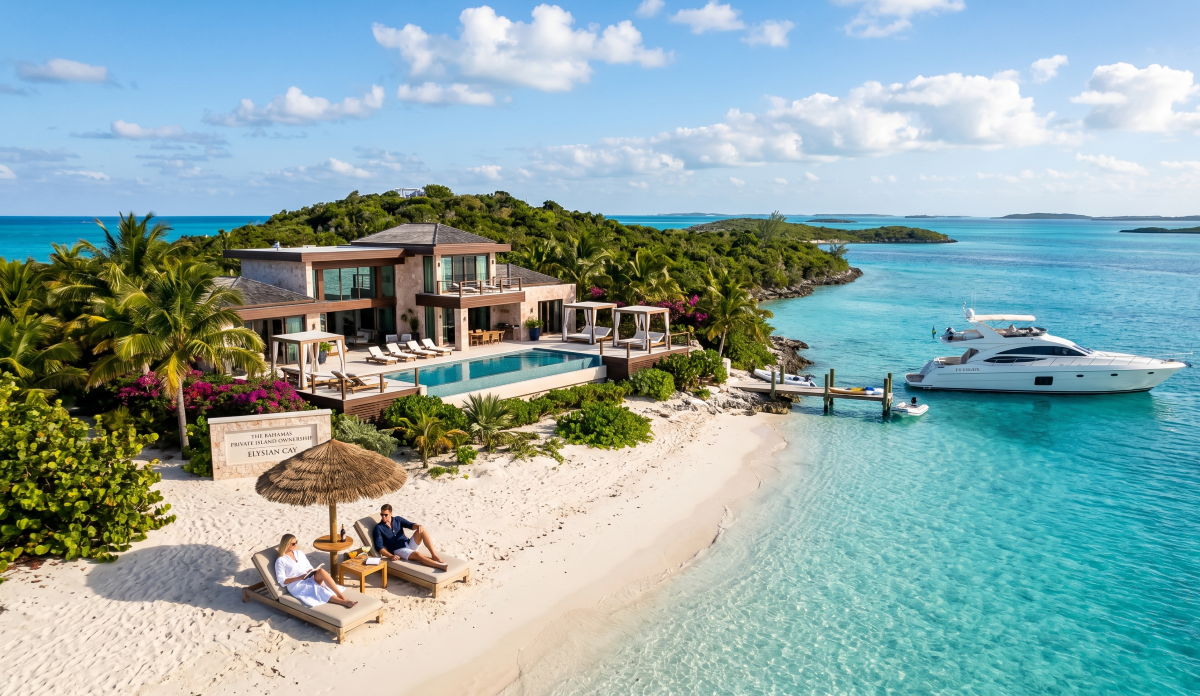
Caribbean branded residences from Four Seasons, Rosewood, and Aman are changing buyer expectations and investment models.
Explore how luxury hospitality brands are redefining second-home ownership across the Bahamas, Turks & Caicos, and the Dominican Republic.
The Hospitality Brand Migration
Caribbean real estate development has entered a distinct phase, one defined less by standalone villa projects and more by strategic partnerships between hoteliers and residential developers. Branded residences properties affiliated with established luxury hospitality names — now account for a growing share of high-value transactions across the Bahamas, Turks & Caicos, and the Dominican Republic.
The shift reflects both supply-side strategy and demand-side preference. Developers gain access to brand equity, operational infrastructure, and financing relationships. Buyers acquire managed assets with rental programs, concierge services, and recognizable resale value. The model, long established in urban markets, has found particular traction in the Caribbean, where property management complexity and absentee ownership create natural demand for institutional oversight.
Why Buyers Favor Managed Ownership
The appeal extends beyond amenities. Branded residences offer structural solutions to friction points inherent in second-home ownership: staffing, maintenance scheduling, security protocols, and income generation during periods of non-use. For buyers balancing multiple properties across geographies, the value proposition is operational efficiency.
Recent transactions suggest a preference for brands with established track records in resort management. Four Seasons, Rosewood, Aman, and Ritz-Carlton continue to attract buyers willing to pay premiums often 20 to 30 percent above comparable unbranded inventory — for the certainty of professional property stewardship.
The rental component matters. Owners typically enter programs yielding 40 to 50 percent of gross rental revenue, with the brand managing bookings, turnover, and guest services. In markets like the Exumas or Turks & Caicos, where demand for luxury villas in the Caribbean remains resilient, this creates measurable cash flow against carrying costs.
At the same time, affluent buyers increasingly view professionally managed residences as part of a broader lifestyle infrastructure strategy rather than purely discretionary vacation ownership.
Developer Calculus and Market Positioning
From a developer perspective, brand affiliation reduces market risk. Pre-sales accelerate when a Four Seasons or Rosewood name attaches to a project, particularly in emerging Caribbean markets where brand recognition substitutes for buyer familiarity with local conditions.
The arrangement also allows developers to command higher price per square foot while sharing operational risk with hospitality partners. In exchange, brands receive management fees, licensing revenue, and expanded portfolio presence in high-net-worth leisure markets.
The Bahamas has seen concentrated activity, with projects spanning Paradise Island, Exuma, and Bimini. Turks & Caicos continues to attract brands seeking to capitalize on direct U.S. flight access and favorable tax structures. The Dominican Republic, particularly Punta Cana and Cap Cana, has emerged as a development frontier for brands targeting Latin American and North American buyers simultaneously.
This growth mirrors the increasing sophistication of Bahamas real estate and Caribbean investment properties, where buyers now evaluate operational quality and long-term market positioning alongside location.
Architectural and Design Implications
Brand standards impose design discipline. Unlike speculative villa developments, branded residences adhere to prototype guidelines governing materials, square footage, and finish specifications. The result is greater consistency and, arguably, greater homogeneity.
Some architects and designers view this as a constraint; others recognize it as a quality floor. For buyers, brand standards provide assurance that properties will meet expectations across locations, whether in the Caribbean, Aspen, or the Maldives.
Interior specifications tend toward neutral palettes and durable materials suited to rental use. While customization exists, it operates within parameters that preserve brand identity and resale value. The trade-off is clear: individuality for reliability.
Increasingly, buyers are prioritizing architecture that supports extended occupancy, wellness integration, and multigenerational living — trends also shaping demand for Caribbean vacation homes and branded residences across the region.
Investment Performance and Liquidity Considerations
Resale data remains limited, given the relative youth of many Caribbean branded residence projects. However, anecdotal evidence suggests that brand affiliation supports price stability, particularly in softer market cycles when unbranded inventory faces steeper discounts.
Liquidity varies by location and brand strength. Properties in Nassau or Providenciales with Four Seasons or Rosewood affiliations tend to transact faster than comparable independent villas, largely due to buyer confidence in operational continuity and rental income potential.
Financing also favors branded properties. Lenders view brand management as risk mitigation, often extending more favorable terms than for standalone developments. For buyers leveraging acquisition, this creates additional financial advantage.
These factors continue to position branded residences as one of the more resilient segments within the broader Caribbean luxury real estate market.
Risks and Market Saturation Questions
The branded residence model is not without vulnerability. Brand dilution remains a concern as hospitality companies expand portfolios to maintain growth. When multiple branded projects compete within a single market, differentiation erodes and rental yields compress.
Management fee structures also warrant scrutiny. Owners forfeit 50 to 60 percent of gross rental revenue to cover brand fees, property management, and operating costs. In markets where occupancy underperforms projections, net returns can disappoint relative to initial underwriting.
Regulatory shifts present additional risk. Changes to short-term rental regulations, property taxation, or residency permit requirements can alter investment returns, particularly in jurisdictions where policy frameworks remain in flux.
Still, demand for professionally managed second-home ownership across the Caribbean remains structurally strong, particularly among buyers seeking operational simplicity and globally recognized hospitality standards.
Where the Market Moves Next
Expect continued brand expansion in the Bahamas, where tax advantages and proximity to U.S. markets support demand. Turks & Caicos will likely see selective new development, constrained by limited available land and environmental regulations. The Dominican Republic offers scale, with developers targeting both North American retirees and Caribbean diaspora buyers.
Smaller islands — Anguilla, the Cayman Islands, Antigua — are testing whether brand affiliation can overcome infrastructure limitations and flight access constraints. Success in these markets will depend on developers’ ability to price realistically against established competitors while delivering brand-standard services in more challenging operating environments.
The broader question is whether buyers will continue to prioritize brand over location, design, or price. As the inventory of branded residences grows, differentiation will shift back toward architecture, site selection, and developer execution. Brands provide a starting point; they do not guarantee investment performance.
To explore Caribbean real estate opportunities, private vacation residences, investment properties, or curated villa experiences across the region, connect with BE Luxury Collection.

Follow
Intagram