
Unlike emerging luxury markets that rely on novelty or rapid expansion, the Caribbean benefits from longevity and institutional memory. Certain jurisdictions have supported private wealth, cross-border ownership, and international mobility for decades. This has created regulatory familiarity, established professional services, and a buyer base accustomed to discretion rather than spectacle.
Destinations such as The Bahamas and Turks and Caicos exemplify this maturity. Their appeal lies not in aggressive positioning, but in reliability: stable legal frameworks, predictable property rights, and sustained demand from North American and European buyers. For global lifestyle brands, this stability translates into long-term operating confidence.
As ultra-high-net-worth individuals increasingly manage multiple residences across jurisdictions, the Caribbean has emerged as a natural anchor — close enough to major financial centres to remain operational, yet distinct enough to offer a meaningful lifestyle shift.
One of the most visible manifestations of lifestyle brand investment has been the rise of branded residences across the Caribbean. While often discussed as a real estate product, these developments function more accurately as brand extensions — designed to capture long-term client relationships rather than transactional sales.
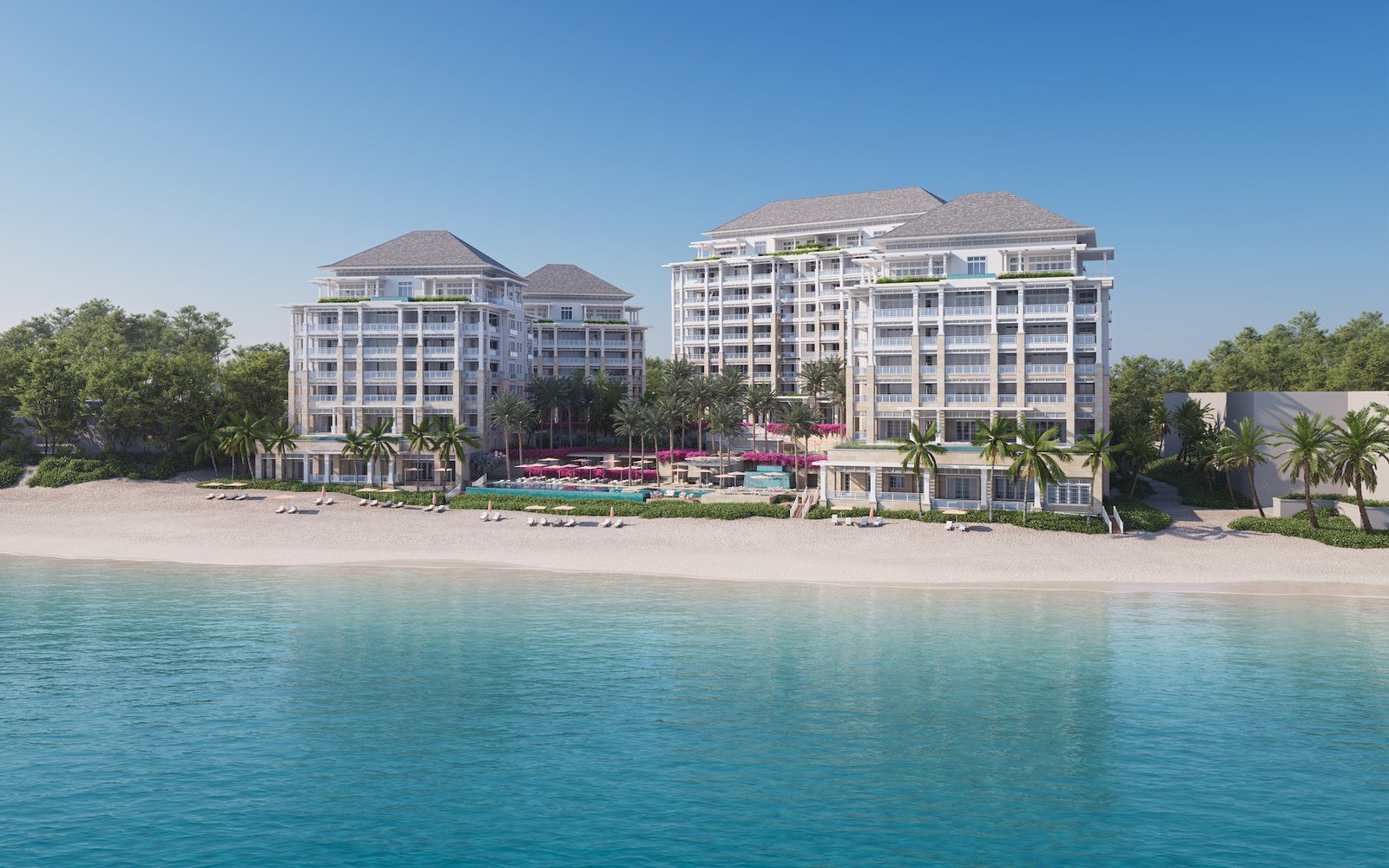
For brands, real estate provides permanence. Unlike hotels, which serve transient guests, residences create continuity. Owners return season after season, integrate into local communities, and often expand their footprint through adjacent investments — whether additional properties, marina access, or private aviation services.
This model aligns closely with contemporary buyer behaviour. UHNW individuals increasingly prioritise environments that feel familiar across borders: consistent service standards, curated experiences, and a sense of belonging without obligation. Caribbean real estate, when integrated thoughtfully, supports this expectation at scale.
Another driver of sustained investment is the region’s inherent supply discipline. Unlike urban luxury markets where vertical expansion is limitless, Caribbean real estate is constrained by geography, zoning, and environmental stewardship. Prime beachfront and waterfront parcels are finite, and many legacy communities actively resist overdevelopment.
This scarcity underpins pricing resilience. Even during periods of global uncertainty, well-located Caribbean assets have demonstrated defensive characteristics — particularly within established enclaves and gated communities. For lifestyle brands with long investment horizons, this offers a compelling balance between brand exposure and capital preservation.
In markets such as Bahamas real estate, supply constraints have also encouraged a shift toward quality over quantity. Developments are increasingly low-density, design-led, and service-oriented — reinforcing the region’s positioning as a lifestyle destination rather than a volume-driven market.
The profile of the Caribbean buyer has evolved materially. While traditional holiday-home purchasers remain active, a growing segment now approaches the region as a strategic base rather than a seasonal retreat.
Drivers of this shift include flexible working structures, generational wealth transfer, and heightened interest in geographic diversification. For global families, the Caribbean offers a jurisdiction where lifestyle, education access, and connectivity can coexist — particularly when paired with thoughtful planning around Bahamas permanent residency or long-term stay frameworks.
Lifestyle brands respond to this behaviour by investing not only in properties, but in surrounding ecosystems: wellness infrastructure, dining concepts, marina facilities, and concierge services. The objective is not occupancy, but integration — ensuring clients can operate seamlessly across multiple homes and regions.
The rise of private villas as the preferred accommodation model has further reinforced real estate investment across the Caribbean. For affluent travellers, villas offer control, privacy, and spatial flexibility that traditional hotels increasingly struggle to match.
From a brand perspective, villas also enable differentiation. They allow for personalised service delivery, bespoke experiences, and deeper client relationships — all without the operational complexity of large-scale resorts. This aligns with broader trends across Caribbean villa rentals, where demand continues to outpace supply in premium locations.
Importantly, the villa model integrates naturally with ownership pathways. Many renters evolve into buyers over time, having already established familiarity with specific locations and service providers. For brands, this creates a virtuous cycle between short-term engagement and long-term investment.
Global lifestyle brands are inherently risk-sensitive. Their willingness to invest in Caribbean real estate reflects confidence in regulatory clarity and cross-border ownership structures. Jurisdictions that support transparent transaction processes, international financing, and long-term ownership planning continue to attract disproportionate attention.
This regulatory reliability is particularly relevant for brands serving globally mobile clients who expect consistency across jurisdictions. Whether structuring ownership vehicles, facilitating multi-generational planning, or aligning with residency-by-investment considerations, Caribbean markets that prioritise clarity over complexity remain preferred.
For lifestyle brands, Caribbean real estate is rarely evaluated solely on yield. Instead, it is assessed as part of a broader strategic framework: client acquisition, retention, and lifetime value.
Properties become physical touchpoints — places where brand values are experienced rather than communicated. Over time, these environments foster trust, familiarity, and long-term alignment between brand and client. This explains why many investments prioritise established markets over speculative growth zones; credibility compounds more effectively than novelty.
As capital becomes more selective and globally mobile, the Caribbean’s role as a lifestyle jurisdiction — rather than a seasonal destination — continues to strengthen. For brands and individuals alike, the region offers a rare combination of permanence and flexibility.
At BE Luxury Collection, we work with clients and partners navigating this evolving landscape — offering area intelligence, discreet advisory, and curated access across Caribbean real estate, villa living, and long-term positioning. Our role is not transactional, but strategic: supporting decisions that endure beyond market cycles and seasonal trends.