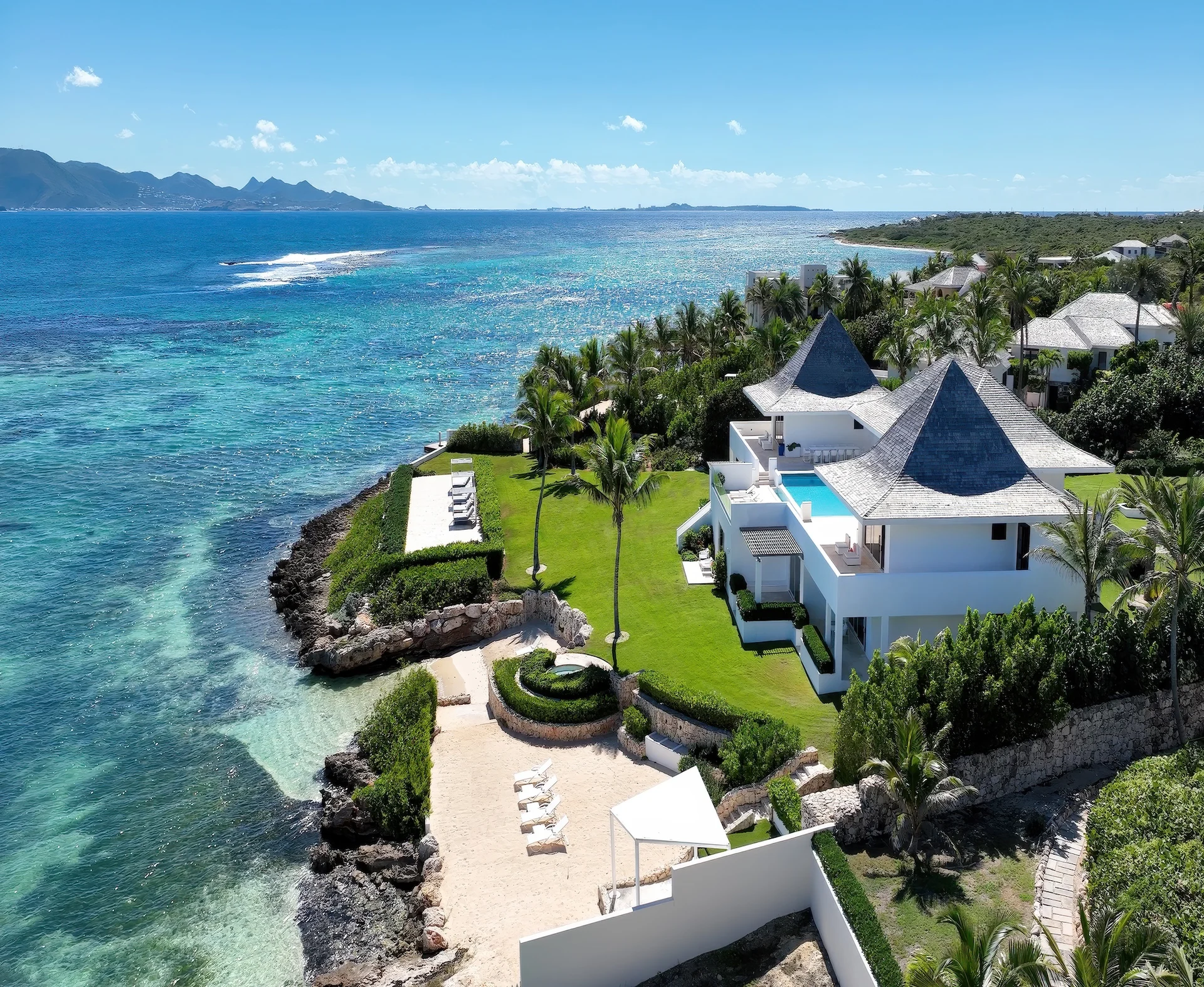

Caribbean real estate markets operate under fundamentally different conditions.
Analysis of pricing trends, regulatory frameworks, and infrastructure development across the Bahamas, Turks & Caicos, Dominican Republic, and emerging jurisdictions.
Regional Markets, Local Realities
The Caribbean real estate market exists as a collection of distinct jurisdictions rather than a unified regional asset class. Policy frameworks, tax structures, land availability, and infrastructure investment vary significantly across islands, creating fundamentally different investment environments within relatively short geographic distances.
Buyers treating the Caribbean as a homogenous market risk misallocating capital. A villa in the Bahamas operates under different ownership, taxation, and resale conditions than comparable property in Turks & Caicos or the Dominican Republic. Understanding these distinctions matters more than square footage or beach access.
The Bahamas: Proximity and Tax Efficiency
Nassau and the Out Islands continue to attract U.S. buyers prioritizing proximity and fiscal advantage. No capital gains tax, no income tax, and no inheritance tax create clear benefits for high-net-worth individuals structuring estate plans or diversifying asset locations. For buyers exploring permanent residency in the Bahamas, these tax advantages become even more compelling.
Flight access from Miami, New York, and other Eastern Seaboard cities supports weekend use, making the Bahamas viable for owners seeking frequent property visits without international travel complexity. This accessibility premium is reflected in pricing: comparable oceanfront properties in Nassau command 15 to 25 percent more than similar assets in less accessible Caribbean markets.
Supply constraints persist, particularly in the Out Islands where land ownership patterns and environmental regulations limit new development. The result is inventory scarcity at the high end, with limited turnover and extended listing periods when properties do reach market.
Development activity concentrates in established areas—Paradise Island, Lyford Cay, Albany—where infrastructure exists and brand-name projects reduce buyer uncertainty. Emerging areas like Exuma attract attention but face infrastructure challenges that elevate development costs and extend project timelines. Understanding the buying process in the Bahamas requires navigating these market-specific conditions.
Turks & Caicos: Privacy and Natural Capital
Turks & Caicos has positioned itself as a preservation-focused market, with regulations restricting development density and protecting coastline integrity. For buyers valuing privacy and environmental quality over amenity density, this creates appeal.
Providenciales remains the primary transaction hub, with Grace Bay and surrounding areas capturing the majority of high-value sales. Price per square foot has risen consistently over the past decade, driven by limited inventory and strong U.S. demand. Properties rarely linger on market; well-priced listings typically transact within 90 to 120 days.
The regulatory environment favors foreign ownership, with no restrictions on non-resident property acquisition and straightforward title transfer processes. For buyers considering extended stays, Turks & Caicos permanent residency pathways offer additional flexibility. Stamp duty and annual property taxes remain modest relative to comparable U.S. resort markets, though recent increases suggest fiscal pressures as government services expand.
Infrastructure development lags demand. Road quality, utility reliability, and waste management systems face strain during peak season. Buyers should underwrite these operational realities into ownership costs, particularly for properties requiring consistent maintenance or rental readiness through vacation rental programs.
Dominican Republic: Scale and Development Pipeline
The Dominican Republic offers something most Caribbean markets cannot: development scale. Punta Cana, Cap Cana, and Casa de Campo provide inventory depth across price points, from mid-tier condominiums to oceanfront estates exceeding $10 million.
This scale attracts different buyer profiles than the Bahamas or Turks & Caicos. Latin American buyers seeking Caribbean access without U.S. dollar exposure; North American retirees prioritizing affordability over exclusivity; investors building rental portfolios rather than single trophy assets.
Pricing reflects this positioning. Oceanfront properties in Cap Cana or Punta Cana trade at discounts of 30 to 50 percent relative to comparable assets in Nassau or Providenciales. For buyers prioritizing cost efficiency and rental income, the value proposition is clear.
The trade-offs are equally clear: denser development, less stringent building standards, and political risk inherent in emerging markets. Due diligence requirements exceed those in more established jurisdictions. Title verification, construction quality assessment, and legal review demand more rigorous attention.
Cayman Islands: Financial Infrastructure and Stability
The Cayman Islands occupy a distinct position, appealing primarily to buyers with existing financial or business ties to the jurisdiction. Banking infrastructure, legal system sophistication, and political stability create confidence among international buyers managing complex financial arrangements.
Seven Mile Beach remains the focal point for luxury residential activity, though inventory remains constrained and pricing reflects scarcity. Properties exceeding $5 million transact infrequently; those above $10 million represent a thin market where buyer and seller must align on valuation without extensive comparable sales data.
Rental yields underperform other Caribbean markets. Owners typically hold property for personal use rather than income generation, given the jurisdiction’s role as a financial hub rather than leisure destination. This limits investment appeal for buyers seeking cash flow to offset carrying costs.
Work permit requirements and residency restrictions create barriers for owners considering long-term occupancy. Unlike the Bahamas or Turks & Caicos, where residency pathways exist for property owners, the Cayman Islands maintain more selective immigration frameworks.
Barbados: Regulatory Maturity and European Connections
Barbados offers regulatory sophistication that appeals to European buyers and those familiar with Commonwealth legal systems. The Special Entry and Reside Permit program provides residence rights for property buyers meeting minimum investment thresholds, creating a clear pathway for extended stays or relocation.
The west coast—areas like Sandy Lane, Royal Westmoreland, and Holetown—commands premium pricing, while the south and east coasts offer better value for buyers prioritizing accessibility over status addresses. Inventory turns over slowly; sellers often hold properties for decades before listing.
British Airways and Virgin Atlantic maintain consistent service from London, positioning Barbados as the most accessible Caribbean destination for UK-based buyers. This European connection differentiates the market from U.S.-dominated jurisdictions like the Bahamas or Turks & Caicos.
Infrastructure quality exceeds most Caribbean competitors. Road networks, utilities, and telecommunications meet developed market standards. Property management services are well-established, with professional firms handling everything from maintenance to rental programs.
Emerging Markets: Anguilla, Antigua, Saint Lucia
Smaller islands compete by offering what established markets increasingly lack: available land, development opportunity, and pricing below regional peaks. Anguilla, Antigua, and Saint Lucia have each attempted to position themselves as alternatives to saturated markets.
Success has been mixed. Anguilla suffers from hurricane exposure and limited flight access. Antigua benefits from citizenship-by-investment programs but faces infrastructure constraints. Saint Lucia offers dramatic topography but struggles with property rights clarity and bureaucratic complexity.
For developers willing to navigate these challenges, opportunities exist. Land costs remain modest, and first-mover advantage can be secured in markets where branded development or infrastructure investment can shift buyer perception. Risk tolerance must be high; timelines must be long.
Comparative Analysis: Matching Market to Objective
Buyers should assess Caribbean real estate markets based on specific objectives rather than generic preferences:
Tax efficiency and U.S. proximity: Bahamas remains optimal, though at premium pricing.
Privacy and environmental preservation: Turks & Caicos, accepting limited inventory and slower development pace.
Scale and affordability: Dominican Republic, with appropriate due diligence and realistic expectations around density and regulations.
Financial infrastructure and legal sophistication: Cayman Islands or Barbados, particularly for buyers with existing professional ties.
Development opportunity and value arbitrage: Emerging markets like Anguilla or Saint Lucia, for those with capital, patience, and operational expertise.
Infrastructure as Competitive Advantage
Flight access determines liquidity. Markets with direct service from major North American cities trade more frequently and command higher valuations than those requiring connections. Private aviation infrastructure—FBO facilities, customs efficiency, hangar availability—increasingly influences buyer decisions at the ultra-high-net-worth level.
Utility reliability matters more than resort amenities for buyers planning extended stays. Power stability, water quality, and internet connectivity affect property usability in ways beach width does not. Markets investing in infrastructure gain competitive advantage as remote work patterns persist.
Healthcare access has emerged as a consideration, particularly among buyers over 50. Proximity to medical facilities meeting U.S. or European standards influences location decisions, especially for those contemplating extended seasonal residence or retirement.
What the Data Suggests
Transaction volume remains concentrated in established markets. Roughly 60 percent of Caribbean luxury real estate activity occurs across the Bahamas, Turks & Caicos, and Dominican Republic. The remaining 40 percent fragments across a dozen smaller jurisdictions, creating thin markets with limited comparable sales data.
Price appreciation varies dramatically. The Bahamas and Turks & Caicos have seen high-end properties appreciate 40 to 60 percent over the past decade. Dominican Republic appreciation has been more modest, though starting from a lower base.
Smaller markets show inconsistent patterns, with individual transactions driving annual statistics rather than sustained trends.
Days on market provide insight into liquidity. Well-priced properties in Nassau or Providenciales typically sell within six months. Comparable assets in emerging markets can remain listed for years, particularly at price points exceeding local buyer capacity.
For buyers navigating these markets, working with experienced advisors who understand regional nuances and can provide concierge-level support throughout the acquisition process becomes essential.
To explore Caribbean real estate opportunities, private vacation residences, or curated villa experiences across the region, connect with BE Luxury Collection.

Follow
Intagram
