Why Valentine’s Day Looks Different in the Caribbean Now
For globally mobile couples, Valentine’s Day has quietly changed. By 2026, it is no longer treated as a date to be filled, but as time to be shaped — deliberately, privately, and with an awareness of how moments linger long after they pass.
In the Caribbean, this shift is especially visible. Islands that were once chosen for atmosphere alone are now selected for how well they support intimacy without interruption, beauty without excess, and experiences that feel personal rather than programmed. What matters is not how much is offered, but how carefully it is curated.
This evolution matters because it mirrors a broader change in how affluent individuals approach lifestyle decisions. Romance, travel, and place are no longer separate considerations. They increasingly overlap with choices around where to return, where to stay longer, and where life feels most balanced.
Valentine’s Day has become one of the clearest expressions of this mindset — not because it is extravagant, but because it is intentional.
A decade ago, a Valentine’s trip might have been defined by securing the right table or booking the most talked-about resort. Today, those gestures feel insufficient to couples who already have access to the world’s best hospitality.
What they seek instead are environments that allow the day — and the days around it — to unfold naturally. This has pushed romance away from crowded dining rooms and toward controlled, private settings where pace, privacy, and atmosphere are aligned.
In the Caribbean, that has meant a growing preference for:
residences over hotel rooms
private chefs over public menus
quiet movement over fixed itineraries
The emphasis is no longer on being seen, but on being undisturbed.
This is not to suggest that restaurants have lost relevance. Rather, their role has become more selective.
In 2026, the restaurants that matter most for Valentine’s Day are those that understand discretion. Couples value spaces that can be adapted — whether through partial buyouts, off-menu dining, or timing that avoids the theatre of peak hours. The experience is shaped around the couple, not the room.
In established Caribbean destinations, particularly in The Bahamas and Turks and Caicos, this approach is increasingly common. Dining becomes one element within a broader private rhythm: a single evening punctuating days spent at a residence, on the water, or in quiet exploration.
What determines a restaurant’s relevance is less its reputation than its ability to integrate seamlessly into a couple’s chosen setting.
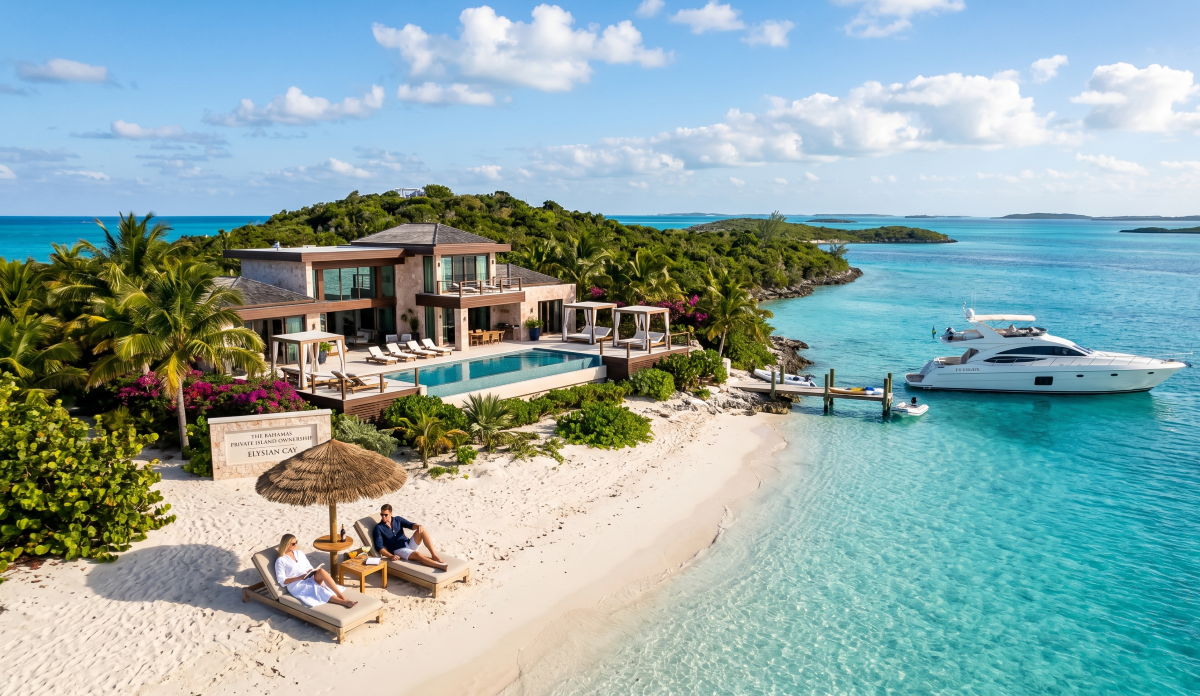
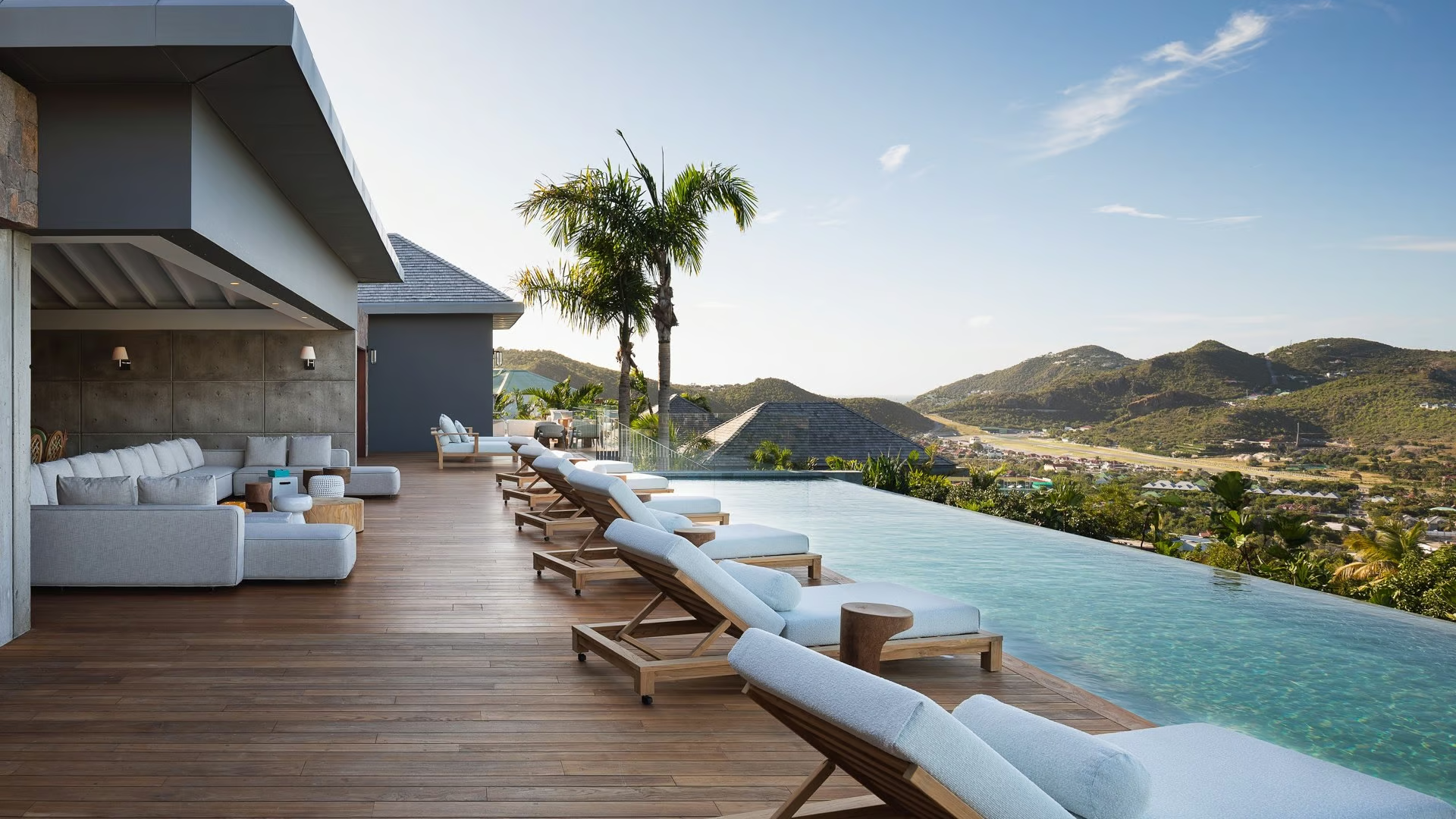
By 2026, the true centrepiece of a Caribbean Valentine is almost always the residence.
Luxury villas and low-density residential enclaves offer something hotels cannot replicate: continuity. They allow couples to wake, dine, move, and rest within a space that feels coherent — architecturally, emotionally, and practically.
This is why Caribbean villa rentals continue to outperform during Valentine’s season. The most sought-after properties are not necessarily the most elaborate, but those that combine privacy, thoughtful design, and proximity to the sea. Waterfront villas with clean lines, open living spaces, and unobtrusive service consistently command both higher rates and repeat bookings.
For many couples, these stays are more than holidays. They are quiet experiments — opportunities to see how a place feels over several uninterrupted days. How mornings unfold.
How evenings settle. Whether the environment supports the kind of life they imagine returning to.
It is often during moments like these that casual rental relationships deepen into long-term attachments.
The most memorable Valentine experiences in the Caribbean are rarely the most elaborate. They are defined instead by restraint.
A short sail along the coast rather than an ambitious itinerary.
A wellness ritual carried out in silence rather than spectacle.
A piece of music played privately at sunset rather than staged entertainment.
These experiences are valued because they feel unrepeatable — shaped by timing, mood, and place rather than by a template. They allow couples to mark the occasion without turning it into an event.
From a broader lifestyle perspective, these choices reveal something important. Properties that support this kind of experience — through dock access, quiet beaches, or adaptable interiors — tend to hold their appeal over time. They work not just for a single celebration, but for the rhythms of return.
One of the quieter truths of Caribbean real estate is that many long-term relationships with an island begin around moments like Valentine’s Day.
A stay that feels effortless often leads to another. A villa that feels familiar becomes a reference point. Over time, questions shift from where should we go next to when do we come back.
For some couples, this progression leads to ownership. For others, it leads to longer seasonal stays, or to conversations around residency and permanence. In The Bahamas, for example, Valentine stays are not uncommonly followed by enquiries around Bahamas permanent residency — not as an immediate goal, but as a future possibility anchored to emotional connection.
These decisions are rarely rushed. They unfold gradually, supported by memory rather than momentum.
The way Valentine’s Day is spent offers a small but telling window into how luxury lifestyles are evolving in the region.
Demand continues to concentrate around places that can offer:
privacy without isolation
beauty without excess
and experiences that feel considered rather than curated
In Bahamas real estate, this has reinforced interest in well-located villas and branded residential communities that allow flexibility between personal use and rental income. In Turks and Caicos real estate, it has supported sustained demand for low-density coastal properties where discretion is built into the environment.
Supply in these segments remains limited. As expectations rise, properties that genuinely support private, meaningful experiences continue to stand apart.
What defines the Caribbean Valentine of 2026 is not grandeur, but thoughtfulness. Couples are less interested in making a statement than in creating a memory that feels aligned with how they live — and how they want to live in the future.
Restaurants, residences, and private experiences no longer exist in isolation. They form a single ecosystem, one that rewards those who choose carefully and return deliberately.
Navigating the Caribbean at this level requires more than access. It requires sensitivity to place, timing, and intention.
BE Luxury Collection works with private clients who approach the Caribbean not simply as a destination, but as part of a broader lifestyle plan. Through deep area intelligence, discretion, and long-term relationships, the firm advises on villa rentals, residential acquisition, and lifestyle positioning across both established and emerging markets.
For those who value experiences that endure — and places that continue to feel right long after the occasion has passed — informed guidance makes all the difference.

Follow
Intagram