The Setai brand has historically favoured disciplined growth. From its origins in Miami Beach to selective international placements, its expansion pattern reflects an emphasis on markets with depth, not hype — destinations capable of sustaining both rate integrity and long-term asset value.
Saint Martin fits this thesis in ways that are easy to overlook.
Unlike emerging resort islands that rely on a single economic driver, Saint Martin operates as a dual-jurisdiction economy, blending French and Dutch governance structures, European lifestyle sensibilities, and North American access. This hybrid identity has quietly insulated the island from some of the volatility seen elsewhere in the Caribbean.
What has changed — and what likely catalysed The Setai’s commitment — is the re-alignment of three forces:
the post-pandemic recalibration of global travel patterns,
renewed capital discipline in Caribbean hospitality development,
and a demonstrable shift in UHNW buyer behaviour toward integrated lifestyle ecosystems rather than isolated trophy assets.
The Setai Saint Martin is not positioned as a volume resort. It is being conceived as a low-density, design-forward property, aligned with the preferences of a clientele that increasingly values discretion, service continuity, and long-term brand stewardship.
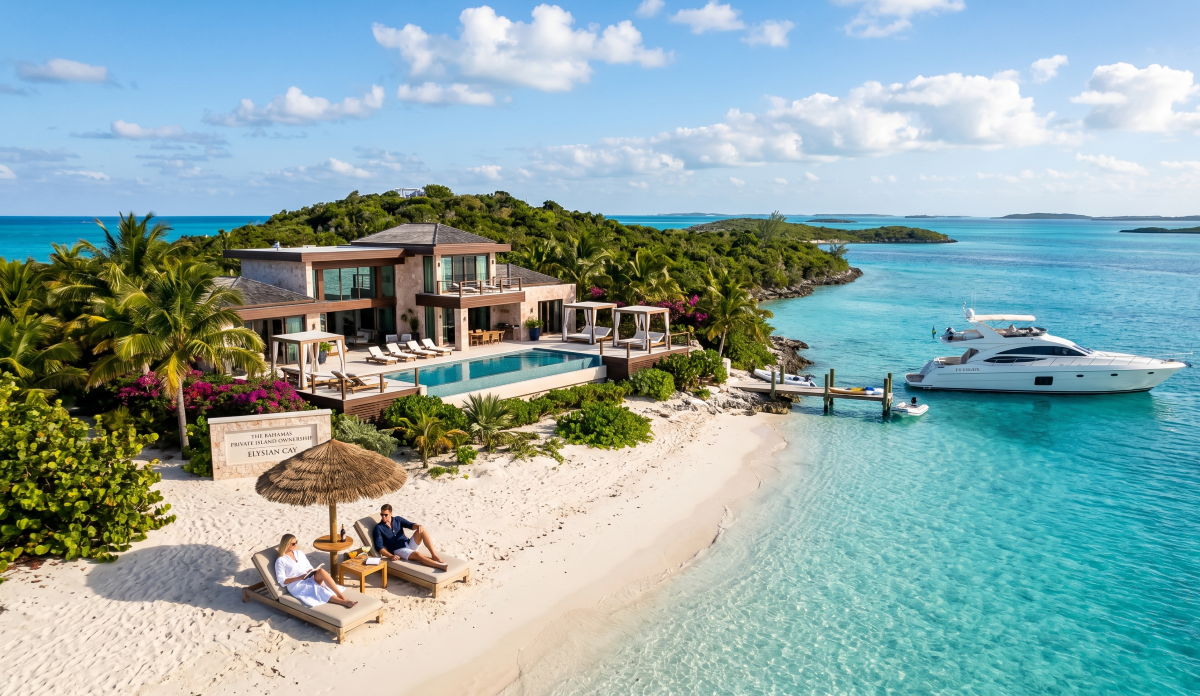
Across the Caribbean, the arrival of top-tier hospitality brands has consistently preceded residential repricing. This pattern is well-documented in markets such as The Bahamas and Turks and Caicos, where branded developments have redefined both buyer expectations and pricing ceilings.
The dynamic is straightforward but powerful.
A globally recognised luxury hotel brand introduces:
institutional-grade operational standards,
predictable service delivery,
and international visibility that reframes a destination in the minds of global buyers.
In Saint Martin’s case, the Setai effect is likely to extend beyond hospitality into adjacent residential zones. Buyers who may have previously discounted the island due to fragmented inventory or inconsistent luxury delivery are forced to reassess.
Historically, Caribbean real estate appreciation has followed hospitality-led clustering. Once a credible anchor brand establishes itself, surrounding residential assets benefit from enhanced liquidity, improved rental performance, and a recalibrated perception of risk.
Saint Martin appears poised for this cycle — not as a speculative surge, but as a measured re-rating.
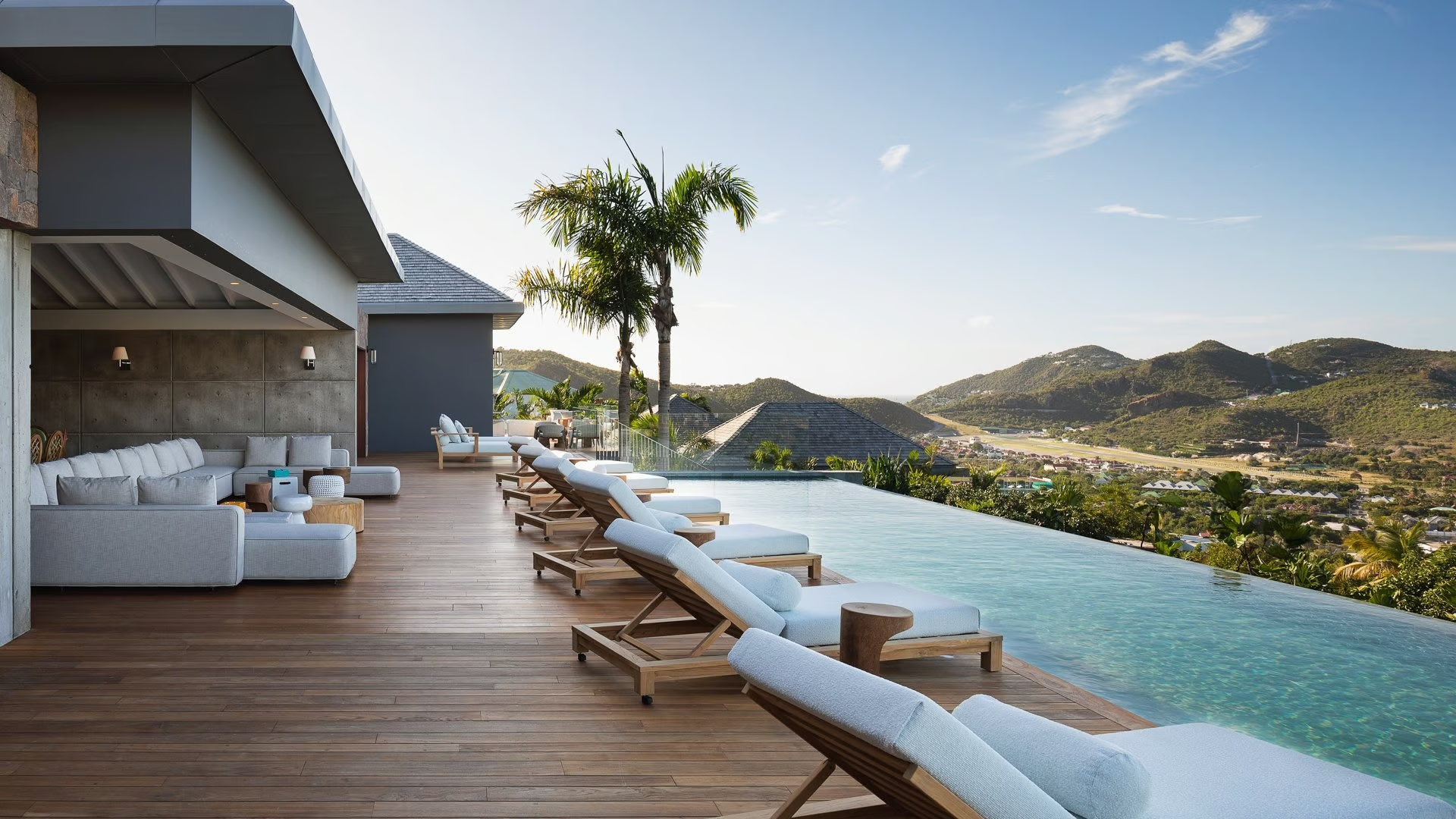
Unlike newer Caribbean markets still defining their luxury identity, Saint Martin already possesses a sophisticated residential stock — hillside villas, beachfront estates, and low-density enclaves with architectural pedigree. What it has lacked in recent years is narrative cohesion.
Pricing, particularly in prime coastal and view-driven locations, has remained comparatively restrained when benchmarked against The Bahamas or Turks and Caicos. This is not due to inferior asset quality, but rather to inconsistent institutional signalling.
The Setai’s entry changes that calculus.
As branded hospitality reinforces destination credibility, residential pricing tends to follow — first through improved transaction velocity, then through tighter bid-ask spreads, and eventually through absolute price appreciation. Importantly, this appreciation is often uneven, rewarding well-positioned, turnkey, and design-led assets disproportionately.
For investors with a longer horizon, this creates a narrow window: a period where quality residential assets remain accessible before broader market repricing takes hold.
The significance of The Setai Saint Martin extends beyond the island itself. It reflects a wider repositioning of Caribbean luxury real estate as a semi-institutional asset class — one that increasingly competes with global resort markets in Europe, the Middle East, and select Asia-Pacific destinations.
Several themes emerge:
First, luxury capital is consolidating around destinations that offer both lifestyle and governance clarity. This mirrors patterns seen in Bahamas real estate and Turks and Caicos real estate, where clear foreign ownership regimes and stable legal frameworks underpin long-term confidence.
Second, buyers are prioritising environments where hospitality, residential living, and infrastructure evolve in tandem. Standalone villas without service ecosystems are gradually losing favour to integrated communities that offer optionality — personal use, rental yield, and future liquidity.
Third, Caribbean villa rentals are no longer treated as opportunistic income streams but as underwritten components of total return. Developments adjacent to globally branded hospitality consistently outperform in both occupancy and rate stability.
Saint Martin’s next phase will likely be defined by these dynamics rather than by speculative development.
The Setai Saint Martin’s 2028 launch is most relevant to investors and lifestyle buyers who think in cycles, not seasons.
This includes:
UHNW individuals seeking early exposure to re-emerging luxury corridors,
family offices diversifying into lifestyle-anchored real assets,
and buyers exploring Caribbean real estate not only for use, but for intergenerational planning.
Importantly, this is not a market for indiscriminate acquisition. As seen in more mature Caribbean jurisdictions, value accrues unevenly. Location precision, design quality, and proximity to institutional anchors will define outperformance.
Saint Martin’s opportunity lies in selectivity — not scale.
Luxury markets rarely announce their inflection points loudly. Instead, they are revealed through capital behaviour — who commits, when, and with what level of conviction.
The Setai’s decision to plant a flag in Saint Martin ahead of 2028 should be read as exactly that: a signal. One that suggests the island’s luxury narrative is being recalibrated, its residential ecosystem repositioned, and its place within the broader Caribbean investment landscape reassessed.
For those tracking the evolution of Caribbean real estate with a long-term lens, this is not a development to watch casually. It is one to interpret carefully — and, where appropriate, to act upon early.
As Caribbean luxury continues to institutionalise, the gap between informed strategy and opportunistic buying will only widen. The most successful investors are those who understand not just where capital is flowing, but why — and what that implies for adjacent residential, rental, and development opportunities.
BE Luxury Collection works alongside private clients who view Caribbean real estate as both a lifestyle asset and a strategic allocation. Through deep area intelligence, disciplined execution, and long-term client relationships, the firm advises on acquisitions, villa rentals, and residency-by-investment pathways across established and emerging Caribbean markets.
In environments shaped by subtle signals rather than headlines, informed guidance is not a luxury. It is the advantage.